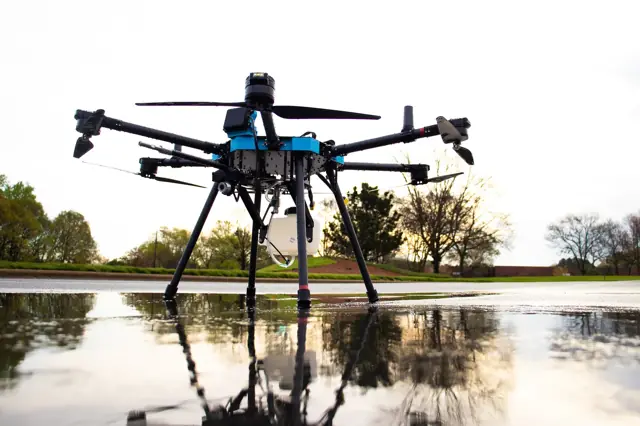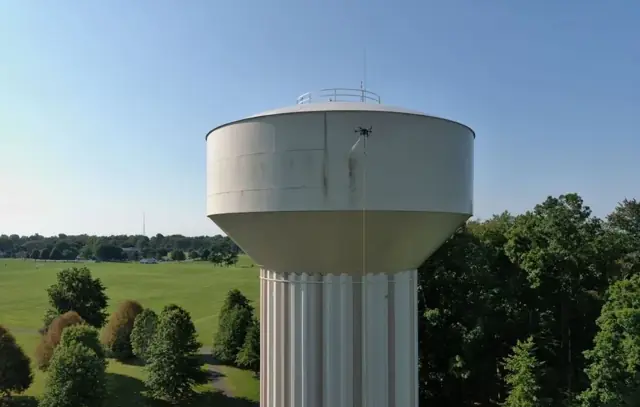

Drone window cleaning keeps the pilot on the ground and needs no roof anchors or rigging, so setup is quick and nobody works at height. Rope access and swing stages put a person at the glass, which suits hand detailing, repairs and inspections. Drones fit routine exterior washing. Hands-on work still needs a technician.
How each method reaches the glass
Rope access puts a trained technician in a harness on ropes tied to anchors on the roof. The technician lowers down the face of the building and cleans by hand with a washer and squeegee.
A swing stage is a platform hung from the roof on cables. One or more workers stand on it and ride up and down the facade. It needs roof rigging such as davits or outrigger beams.
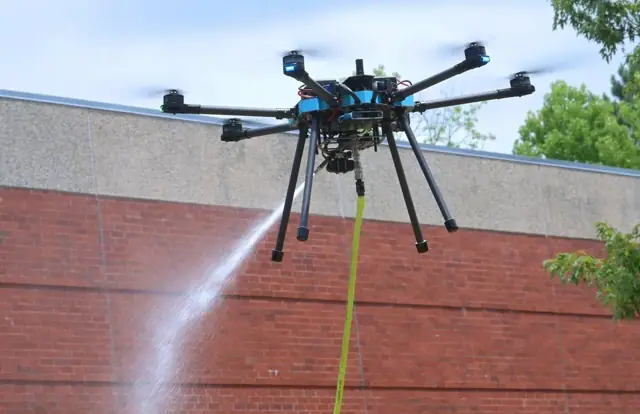
A cleaning drone flies along the facade and sprays deionized water and a safe cleaning solution. The pilot stays on the ground. Nothing is attached to the roof and nobody leaves the ground.
Setup and time on site
Rope and stage work starts on the roof. Anchors have to exist, be in the right places and be inspected. Rigging is carried up, set and moved for each drop. On older buildings or buildings with awkward roofs, this can take as long as the cleaning itself.
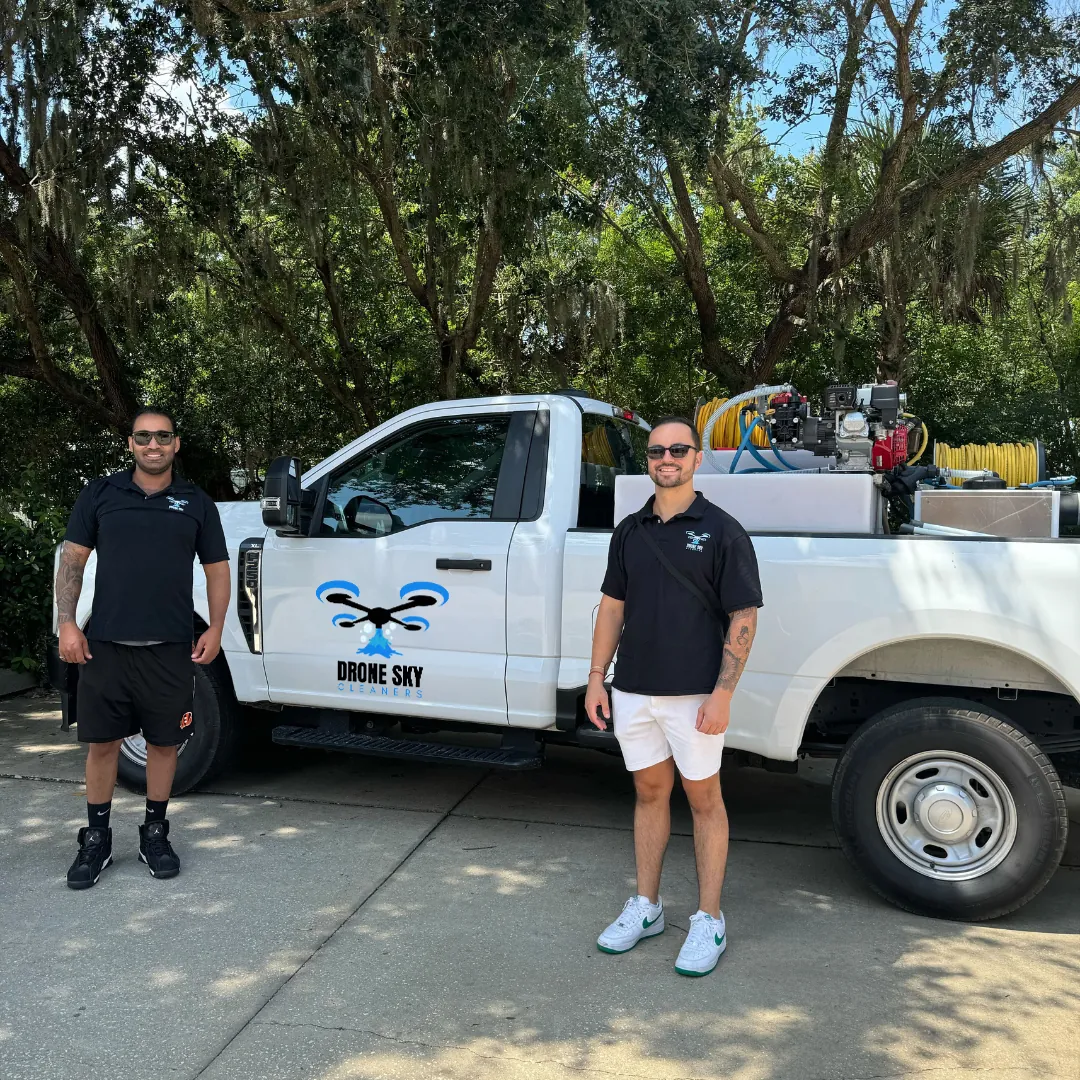
A drone crew sets up on the ground: water system, hose, cones and tape. When one side is done, they walk the equipment to the next. There is no roof access to arrange, which is helpful on buildings where the roof holds mechanical equipment, solar panels or has no anchors at all.
Disruption at street level is similar for all three methods. Whatever is used, the area below the work has to be closed off while cleaning is under way. The difference is mostly on the roof and in how long the equipment stays on site.
Safety: where the risk sits
With ropes and stages, the main risk is a person working at height. The industry manages that risk with training, equipment checks and rescue plans, and skilled crews work this way every day. The risk is controlled, but the person is still up there.
With a drone, the person is on the ground. The risks are different: an aircraft and falling water above a public area. Those are managed by cordoning off the zone below, checking the weather, and flying under aviation rules. In the United States that is FAA Part 107. In Canada it is Transport Canada drone rules. Rules change, so operators must check the current rules.
Reach and building shape
Each method has shapes it handles well and shapes it does not.
- Drones reach sloped glass, tall atriums, glass above canopies and facades with no anchors above them
- Drones need clear air to fly, so trees, wires and very narrow gaps between buildings can block a section
- Rope technicians can work in tight spots, under overhangs and inside recesses where a drone cannot hold position
- Swing stages suit long, flat, uninterrupted faces and struggle with setbacks and irregular rooflines
- Buildings near airports may need airspace authorization before a drone can fly
The cleaning result
A rope or stage technician cleans by touch. They can scrub a stubborn mark, scrape off paint specks with the right tool and look at each pane up close. That hand contact matters for restoration work.
A drone cleans with spray. Deionized water dries without mineral spots, so routine dirt, dust and rain marks come off without a squeegee. Heavy staining may need a second pass. Some deposits, such as old baked-on mineral stains, may need hands-on treatment that a drone does not provide.
Where rope access and swing stages still fit
Drones do not replace every job at height. A person at the glass is still the right choice for:
- Replacing sealant, caulking or gaskets
- Glass repair, pane replacement or leak investigation
- Close-up facade inspections that call for touching the surface
- Post-construction cleans with paint, cement or adhesive stuck to the glass
- Sections a drone cannot legally or physically reach
How to choose for your building
Start with the purpose of the visit. If it is routine exterior washing on a schedule, a drone is often the simpler setup with less disruption at the roof and entrances. If it is repair, restoration or inspection, book technicians.
Many buildings use both: drones for regular washing and rope crews when hands-on work is due. Drone Sky Cleaners does not use scaffolding, swing stages, rope access or lifts, so it will tell you if part of your job needs another trade. Request a quote and the team will look at your building's height, glass area and access.
Common questions
Can a drone clean a building that has no roof anchors?
Yes. A drone does not attach to the roof, so missing or uncertified anchors do not stop the job. This is one reason owners of older or mid-rise buildings look at drones when rope access would first require new anchor installation.
Does wind affect rope access and drones the same way?
Wind limits every method of working on a facade. Rope technicians and swing stages stop when gusts make the work unsafe, and drones also have wind limits. No method is immune to weather, so build some flexibility into the schedule.
Will a drone scratch or damage the glass?
The drone does not touch the glass. It sprays from a short distance, so there are no ropes, platforms or tools rubbing against the facade. Ask the operator how they handle loose seals or cracked panes found during the pre-inspection.