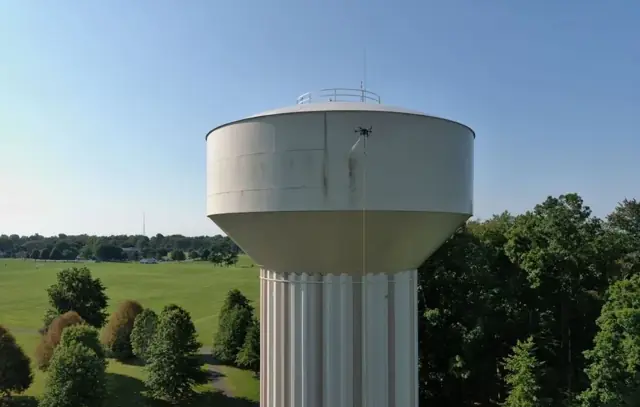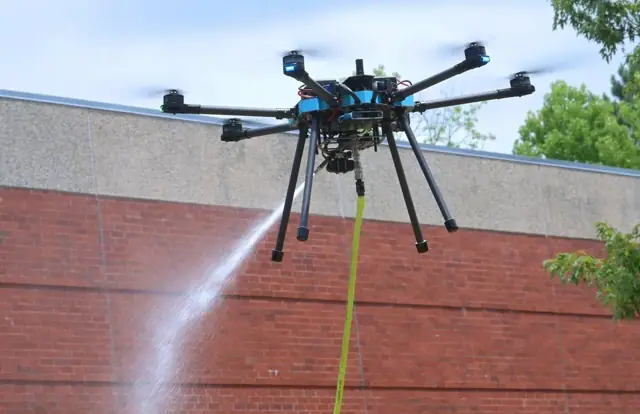

A boom lift or bucket truck raises a worker to the glass, so it needs firm ground, room to drive and time to reposition. A drone flies the wash to the glass while the pilot stays on the ground, so lawns and paving are left alone. A lift is still the right tool for hands-on repairs.
Two ways to reach the same glass
For mid-rise offices, warehouses, schools and apartment blocks, the usual way to wash upper windows has been to rent a boom lift or bring in a bucket truck. A worker rides up in the basket and cleans by hand or with a water-fed pole.
A drone wash reaches the same glass a different way. The drone sprays deionized (purified) water and a safe cleaning solution, and the pilot controls it from the ground. Nobody leaves the pavement. Both methods can get a building clean. The differences show up on the ground, in the set-up and at the edges of what each can reach.
Ground access and landscaping
A lift is a heavy machine on wheels or tracks. It needs a route to each elevation and firm, fairly level ground to stand on. That is easy on a paved lot. It is harder almost everywhere else.
- Lawns and planting beds can rut or compact under the weight
- Decorative pavers and irrigation lines can crack
- Slopes, retaining walls and ponds can block a side of the building entirely
- Courtyards and plazas built over parking may have load limits
- Fences, bollards and narrow gates can stop the machine getting in
What a drone needs on the ground instead
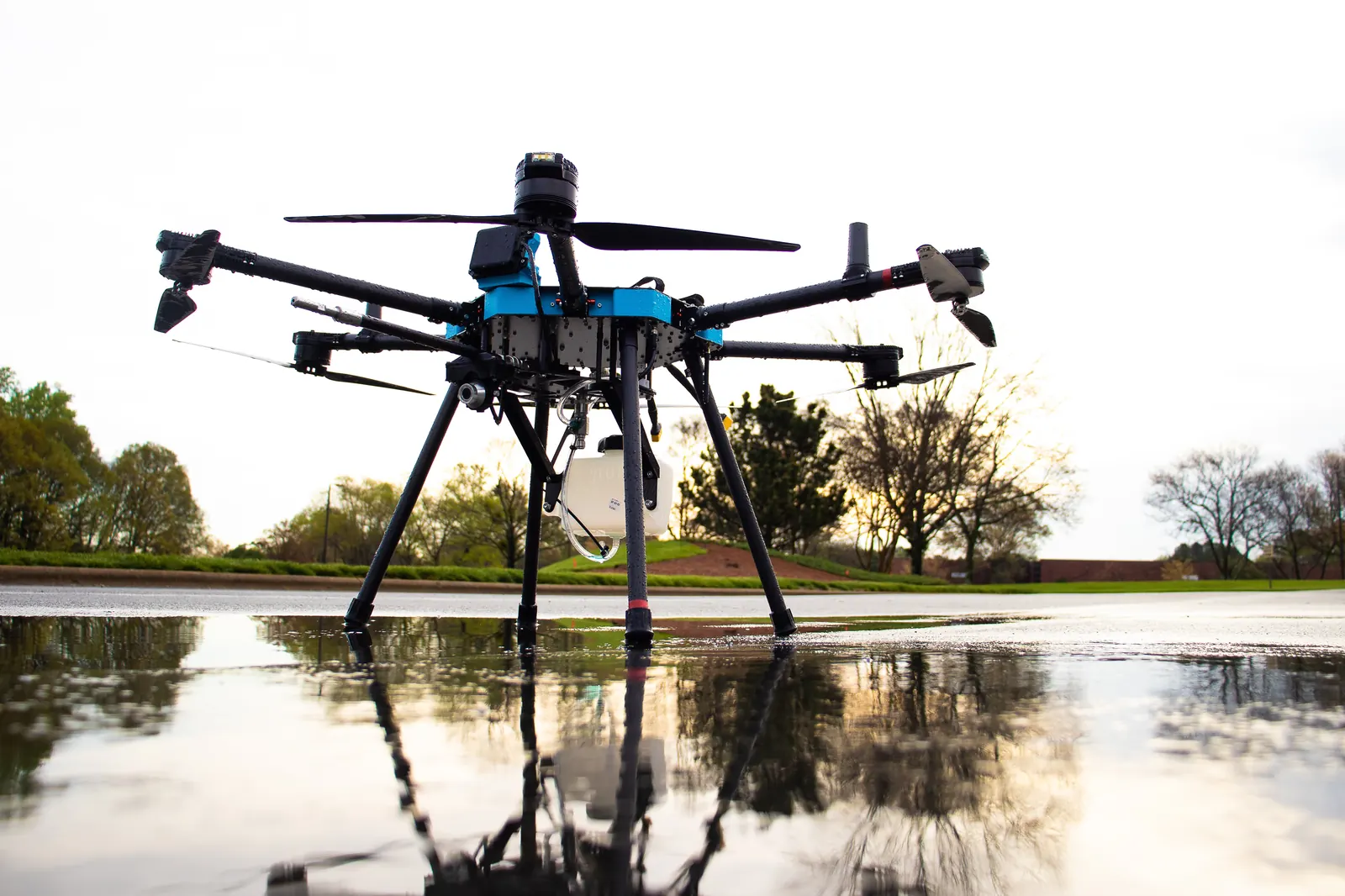
A drone needs a clear spot to take off and land, room for the crew's equipment, and a cordoned area below the section being washed. It does not drive across the grass or sit on the pavers. For buildings wrapped in landscaping, that is often the deciding factor.
Bucket trucks have a similar footprint problem from the street side. The truck has to park beside the building, often with stabilizers out, which can take up a traffic lane, a row of parking bays or a stretch of sidewalk for as long as the work lasts.
Set-up and time on site
With a lift, the day starts before any cleaning does. The machine has to be delivered, unloaded and driven into position. Whoever operates it needs the right training and fall protection. Then it is repositioned again and again along each face of the building, and collected at the end.
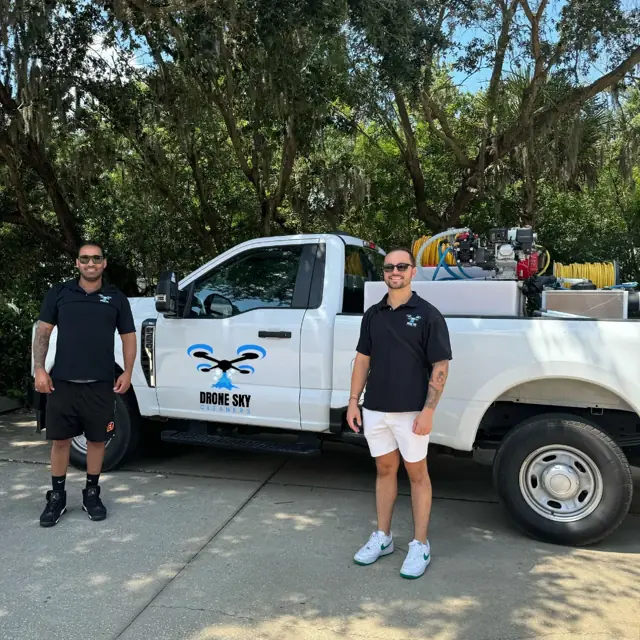
A drone crew's set-up is lighter. With Drone Sky Cleaners, the visit runs through pre-inspection, flight planning, cordoning off the area below, cleaning, final inspection and before-and-after photos. Moving from one elevation to the next means moving the cordon and the crew, not a machine. That usually means less disruption to parking, deliveries and entrances.
Reach
Every lift has a maximum working height and a maximum outreach, and both depend on where the base can stand. Glass set back above a lower roof, windows over an atrium or loading canopy, and upper floors behind a wide planted strip are classic trouble spots. If the base cannot get close, the basket cannot get there.
A drone approaches from the air, so setbacks and obstacles on the ground matter less. It can wash above a podium roof or across a strip of planting without touching either. Its own limits are different ones: wind, rain, and airspace near airports, where a flight needs authorization first.
When a lift is still the right tool
A drone washes. It does not put hands on the building. Some jobs need a person at the glass, and for those a lift or bucket truck earns its place:
A lift also makes sense when it is already on site for other trades. If a contractor has one booked for facade repairs, adding a hand clean of the same area is practical.
- Replacing glass, seals or caulking
- Scraping off paint, adhesive or construction debris
- Restoration of etched or heavily stained glass
- Installing or repairing signage and lighting
- Close inspection where someone needs to touch or test a component
- Sites where a drone flight cannot be approved
Using both, and getting a quote
Many properties end up with a mix. Routine washing goes to the drone, and a lift comes out only when there is repair work to do. Heavy staining may need a second drone pass, or hand work on the worst panes.
To compare fairly, describe your site honestly: what the ground is like on each side, where a machine could and could not stand, and what condition the glass is in. Drone Sky Cleaners prices quotes per building after looking at height, glass area and access, and takes requests across Canada and the United States.
Common questions
Is a drone wash as thorough as cleaning from a boom lift?
For routine dirt, dust and grime, a drone wash with purified water does the job well. A person in a basket can scrub or scrape a stubborn spot by hand, which a drone cannot. Stubborn areas may need a second pass or hand work.
Will a drone damage my lawn or paving like a lift can?
The drone never drives on it. It takes off from one small clear spot and works from the air. The crew sets up equipment and a cordon on the ground, but there is no heavy machine crossing grass, pavers or irrigation.
My building is only three storeys. Is a drone worth considering?
It can be. Height is only one factor. If your building has soft ground, slopes, planting or tight access around it, a drone may reach windows that a lift would struggle to get near. Share photos of each side when you ask.