
Deionized water window cleaning uses water that has had its dissolved minerals removed. Spots on glass are minerals left behind when ordinary water evaporates. Deionized water has nothing to leave behind, so it dries clear without a squeegee. A cleaning solution is still used for greasy, sticky or organic dirt that water alone will not lift.
What deionized water is
Tap water looks clear, but it carries dissolved minerals such as calcium and magnesium, along with other salts. You cannot see them in a glass of water. You can see them on a shower door or a kettle, where they build up as a white crust.
Deionized water, often shortened to DI water, is water that has had those dissolved minerals taken out. The minerals exist in water as charged particles called ions. A deionizing filter traps those ions and lets the water through. What comes out is very close to pure water.
Why ordinary water leaves spots
Think about washing a car with a garden hose on a sunny day. If you let it air dry, the paint and windows end up covered in pale rings. Those rings are not dirt. They are the minerals that were dissolved in the hose water.
When a drop of water evaporates, only the water leaves. Everything dissolved in it stays on the surface. The harder the local water, the more it leaves behind. This is why traditional window cleaning relies on a squeegee: the blade removes the water before it can dry on the glass.
Why deionized water dries spot-free
Deionized water has nothing dissolved in it to leave behind. When a drop of it evaporates from a window, the glass underneath is clear. That is the whole idea. The rinse water can be left to dry on its own.
Pure water also cleans well. Because it carries no minerals, it readily picks up and holds dust, salts and loose grime from the surface, then carries them away as it runs off. For this to work, the final rinse has to be thorough. Any dirty water left sitting on the glass will dry with the dirt still in it.
This is the same reason the final rinse at a car wash is often labeled spot-free. The principle is identical on a storefront or a tower: rinse with pure water and let the air do the drying.
How it is made on a job
Cleaning crews usually make purified water on site or bring it in a tank. Supply water is pushed through filters, often in stages, with a deionizing resin as the last step. The resin beads hold on to the mineral ions until they are used up, then the resin is replaced.
Crews check water purity with a small handheld meter that measures dissolved solids. If the reading starts to climb, the filter needs attention. It is a quick check, and it is the difference between a spot-free finish and a spotted one, so it is worth asking an operator how they monitor their water.
Why it suits drone cleaning
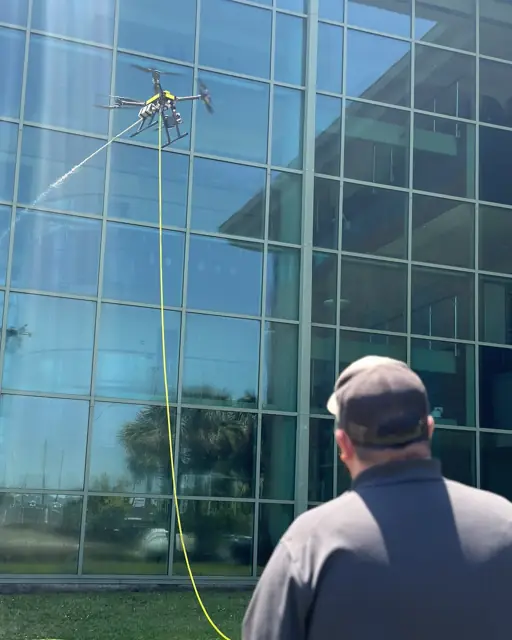
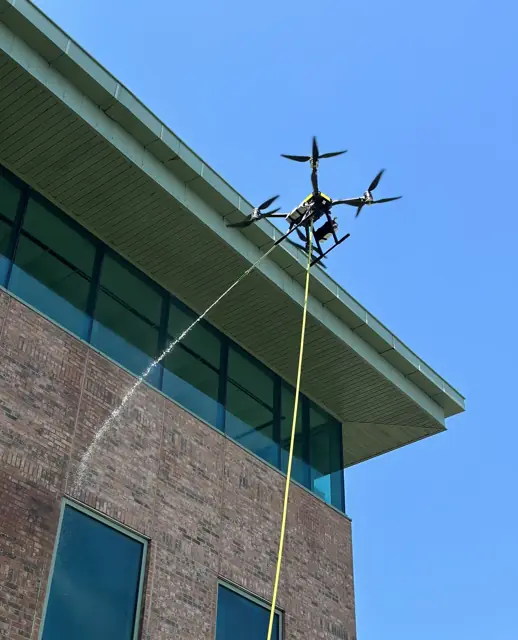
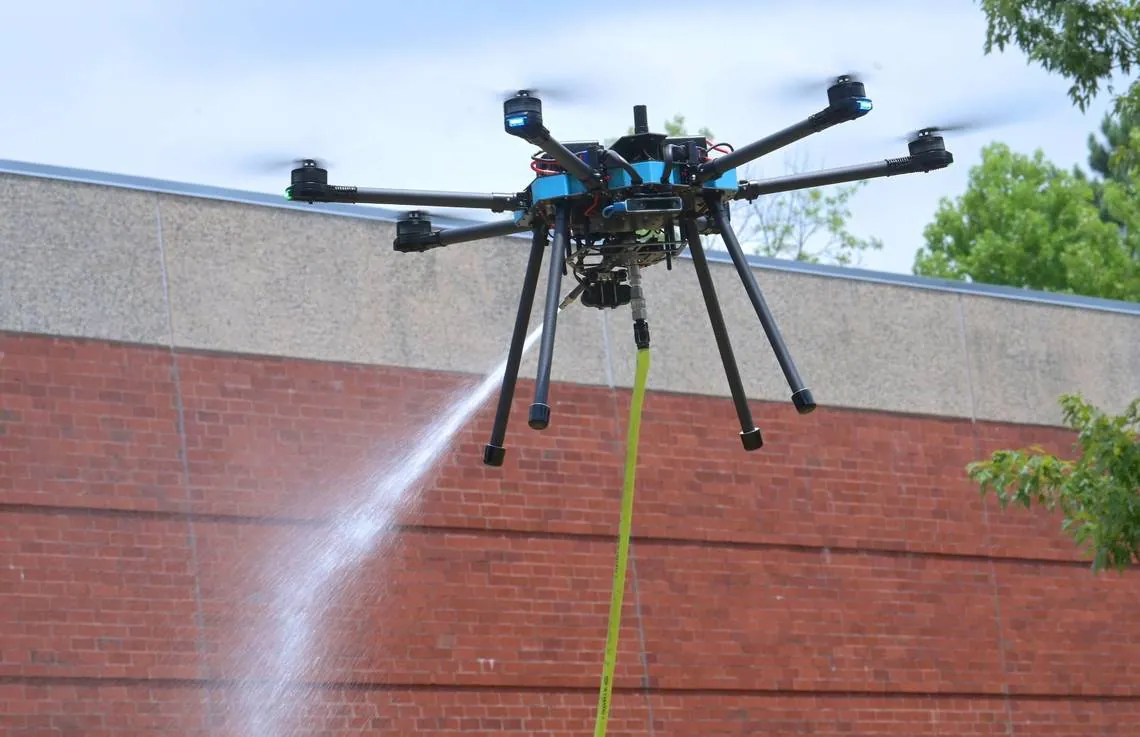
A drone cannot use a squeegee. It cleans by spraying from a short distance, and the water then dries on the glass by itself. With tap water, that would leave every pane spotted. With deionized water, the glass dries clear.
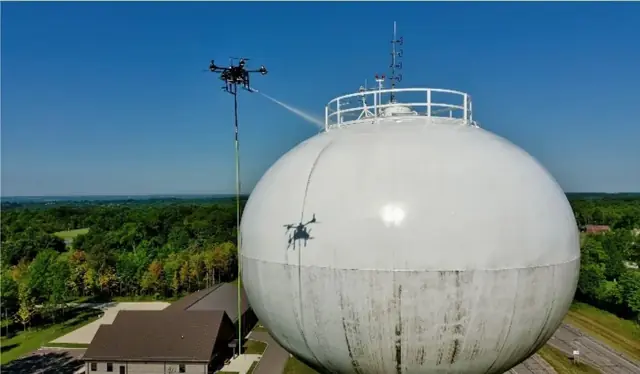
This is why Drone Sky Cleaners washes with deionized water. It lets the drone clean windows, frames and facade surfaces in one pass while the pilot stays on the ground, with no scaffolding, swing stages, rope access or lifts.
Where a cleaning solution is still needed
Pure water handles dust, pollen, light traffic film and salt spray well. Some dirt needs more help, because it does not dissolve in water or is stuck to the surface. In those cases a safe cleaning solution is applied to loosen the dirt, followed by a deionized rinse.
- Greasy film from kitchen exhausts, traffic or parking garages
- Bird droppings that have dried on the glass or sills
- Tree sap and other sticky residue
- Algae, mildew or moss on shaded frames and facades
- Glass that has gone a long time between cleans
What deionized water will not do
It is a cleaning method, not a repair. Old mineral stains that have etched into the glass, scratches, and failed seals that fog a window from the inside will still be there after a wash. Heavy staining may need a second pass or a different treatment.
It also works well only when windows are cleaned on a sensible schedule. Regular rinsing keeps buildup light, which is when pure water does its job with the least effort. To find out what your building needs, request a quote from Drone Sky Cleaners.
Common questions
Is deionized water the same as distilled water?
They are both purified, but made differently. Distilled water is boiled and condensed. Deionized water is passed through a resin that traps mineral ions. For window cleaning the result is similar: water with almost nothing dissolved in it to leave a spot.
Is deionized water safe for window frames and seals?
It is simply water with the minerals removed, so it contains no added chemicals. It is widely used on glass, metal frames and painted surfaces. Seals that are already cracked or loose can let any water in, so those should be flagged before washing.
Why do my windows look streaky right after a pure water clean?
Windows cleaned with deionized water are left wet and can look streaky until they dry. Once the water evaporates the glass should be clear. If marks remain after drying, the pane likely needed a longer rinse or has older staining.