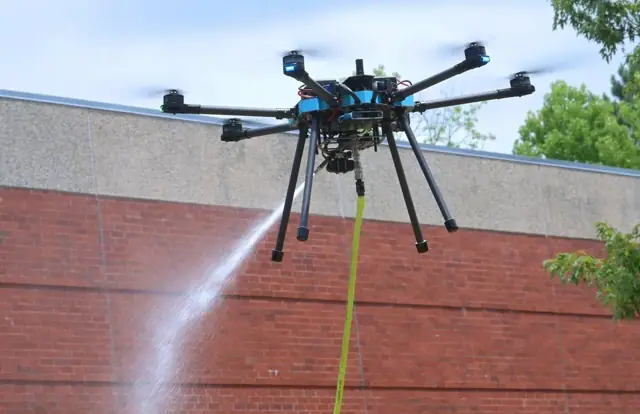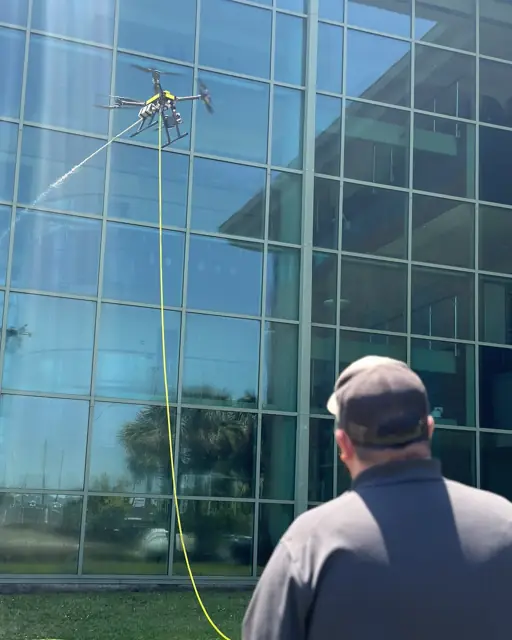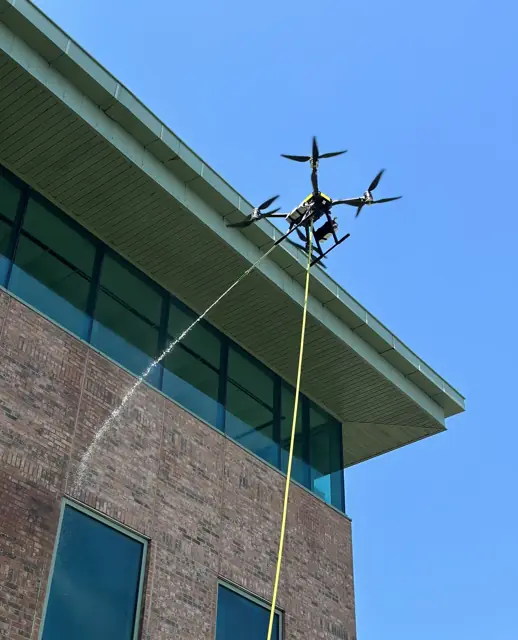

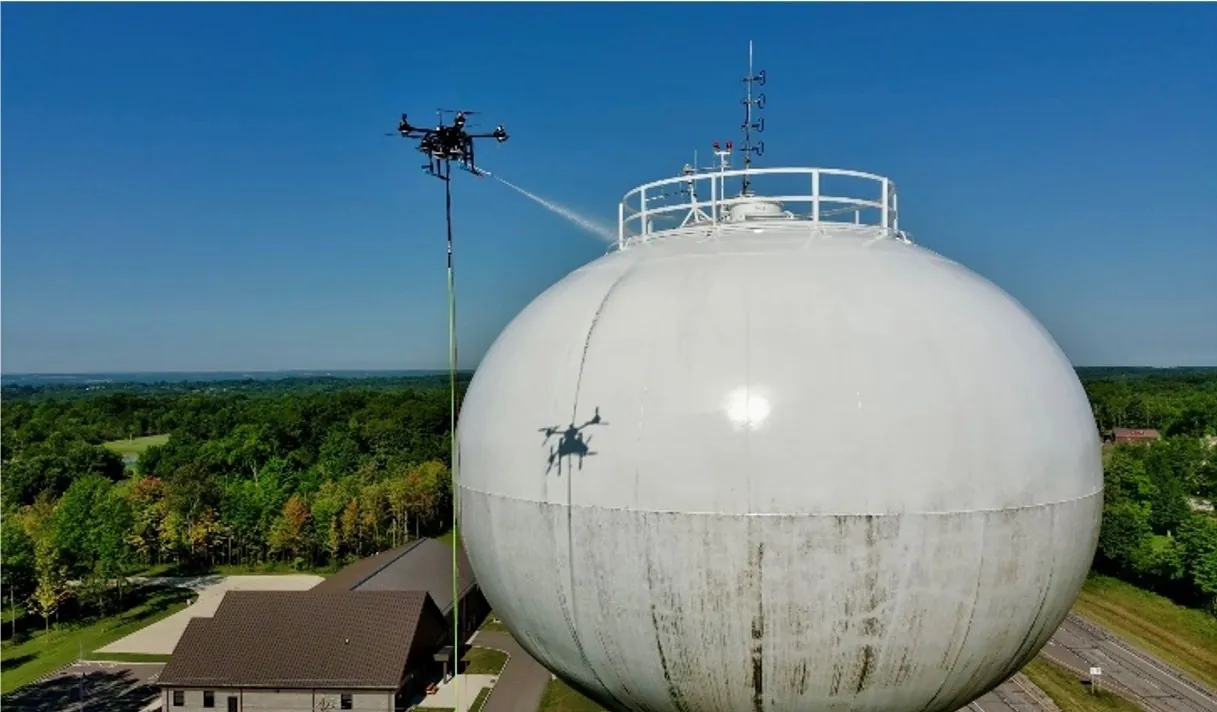
Pressure washing removes dirt with the force of the water. Soft washing uses low pressure and lets a cleaning solution loosen the dirt before a gentle rinse. Hard surfaces like bare concrete can take force. Cladding, painted panels, glass and roofs are safer with soft washing, which is how most drone exterior cleaning is done.
Two ways to get a wall clean
People often say drone pressure washing when they mean any exterior wash done by a drone. In practice there are two different methods, and they treat a building very differently.
Pressure washing relies on force. A narrow, fast stream of water hits the surface and knocks the dirt loose. Soft washing relies on chemistry and time. A cleaning solution is applied at low pressure, it sits for a short while and breaks the bond between the dirt and the surface, and then a gentle rinse carries everything away.
Both can leave a surface looking clean on the day. The difference shows in what happens to the surface underneath.
What high pressure does to a surface
Force does not know the difference between dirt and the material it is sitting on. On a hard, dense surface that is fine. On a softer or coated surface, a strong jet can strip paint, score wood, blow out old mortar and leave visible wand marks that only show once the wall dries.
Water under pressure also travels. It can get behind siding laps, under flashing and past window seals, where it stays wet long after the outside looks dry. On a roof, a hard jet can lift shingle edges and wash away the protective granules.
None of this means pressure washing is wrong. It means it belongs on the right surfaces.
How soft washing does the same job gently
Soft washing flips the approach. The solution does the work and the water only rinses. Because the spray lands at low pressure, closer to a heavy rain than a jet, it does not cut into coatings or drive water into joints.
It also deals with living growth differently. Algae, mold and mildew are attached to the surface. Blasting them tends to remove the visible top layer. A cleaning solution matched to the surface treats the growth itself, so the wall is cleaner at the end and tends to stay clean longer.
The final rinse matters too. Rinsing with deionized water leaves no mineral spots behind as the surface dries, which is the main reason purified water is used on glass and dark panels.
Which surfaces suit each method
A simple way to decide is to ask how hard and how sealed the surface is. Here is a general guide.
- Bare concrete, pavers and loading aprons: usually fine with pressure washing.
- Parking garage decks and ramps: often pressure washed on the driving surface, with gentler washing on painted walls and signs.
- Glass and window frames: soft washing with a purified water rinse.
- Metal and composite cladding panels: soft washing, to protect the finish and the joints.
- Stucco, render and painted walls: soft washing, since force can pit and peel them.
- Vinyl and wood siding: soft washing, to keep water out from behind the boards.
- Shingle, tile and membrane roofs: soft washing only.
Why low pressure plus the right solution protects cladding and roofs
Cladding systems are built to shed rain that falls down the face of the building. They are not built to resist a jet aimed straight into the joints. Low pressure keeps water moving the way the system was designed to handle it.
Finishes matter as well. Many panels carry a factory coating that gives them their color and weather resistance. That coating is thin. A solution that loosens dirt without scrubbing or blasting leaves the coating alone.
Roofs follow the same logic. The dark streaks you see on many roofs are growth, not just dirt. A low pressure treatment deals with the growth without lifting, cracking or wearing the roofing material.
Where a drone fits in
A cleaning drone carries a spray system up the building while the pilot stays on the ground. It applies deionized water and a safe cleaning solution at low pressure, which makes it a natural fit for soft washing windows, facades and roofs. There is no scaffolding, swing stage, rope access or lift.
So when a quote says drone pressure washing, ask which method is meant. For most facade and roof work the honest answer is a soft wash delivered by drone.
It has limits. Strong wind and bad weather stop flights. Heavy staining can need a second pass. Ground level concrete with thick buildup may still call for a conventional pressure washer.
Questions to ask before you book
A short conversation up front saves trouble later. Ask what pressure and what solution will be used on each surface, how nearby plants and vehicles are protected, and what happens if a stain does not lift on the first pass.
Drone Sky Cleaners prices each building after looking at its height, glass area and access, and starts every job with a pre-inspection. That inspection is the moment to point out delicate finishes, old sealant and any area that has leaked before.
Common questions
Is soft washing strong enough for a very dirty building?
Usually, yes. The cleaning solution is chosen for the type of soiling, and it is given time to work before rinsing. Thick or long neglected buildup may need a second application, which the crew can judge once the first pass has dried.
Can a drone pressure wash a concrete parking deck?
Drones are mainly used for low pressure washing of walls, glass and roofs. Flat concrete with ground-in tire marks and oil often responds better to ground equipment. A pre-inspection will show which parts of a garage suit a drone and which do not.
Will the cleaning solution harm plants around the building?
A safe cleaning solution is used, and the area below is cordoned off before work starts. Tell the crew about planters, gardens or ponds during the pre-inspection so they can plan the flight path and the rinse with those spots in mind.