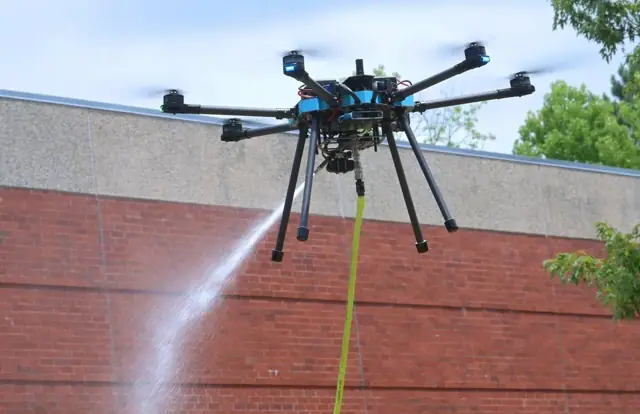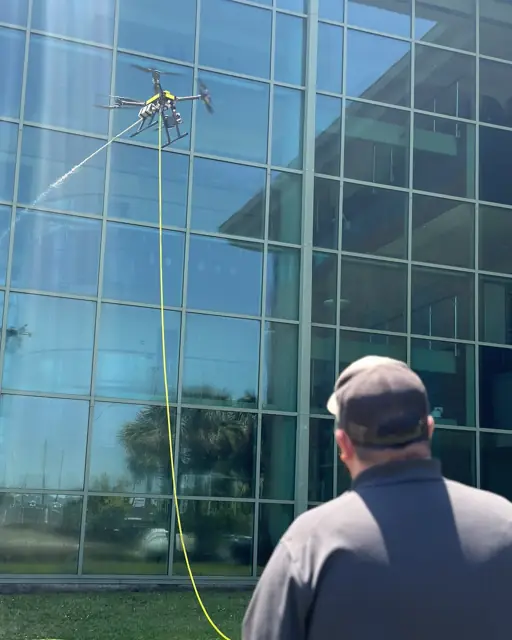

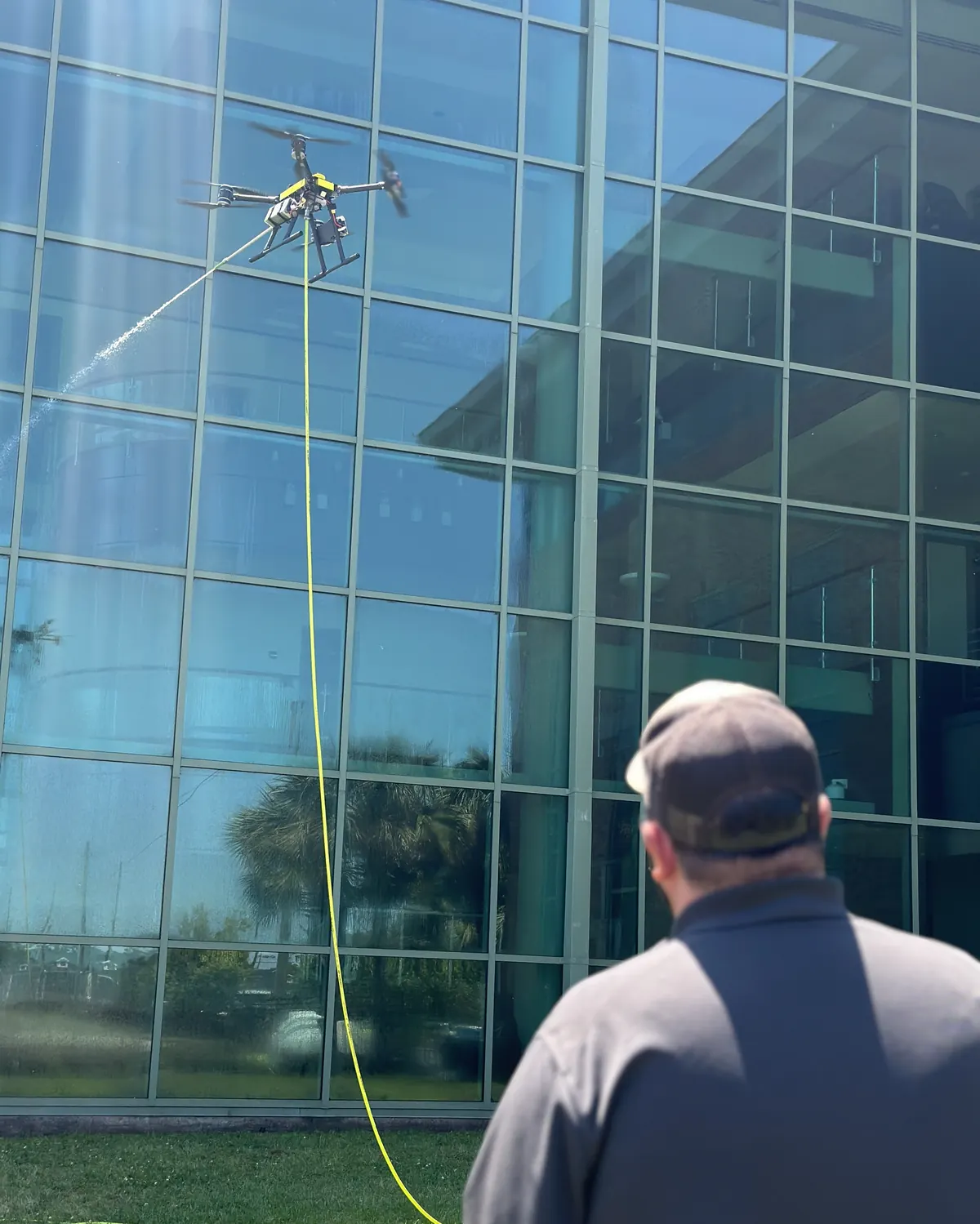
Drone window cleaning is designed to take people off the side of the building. The pilot stays on the ground, the area below is cordoned off, and flights are planned around weather and airspace rules. No method is free of risk, so safety depends on a trained, certified operator who follows a clear process.
What safe means on a cleaning job
When a building manager asks if a method is safe, they usually mean three things. Is the crew safe? Are the people walking below safe? Is the building itself safe from damage? A fair answer covers all three.
Drone cleaning changes the first question the most, because nobody works at height. The other two depend on planning and discipline on the day. Here is how each one is handled.
The pilot stays on the ground
Traditional high-rise window cleaning puts a person on a rope, a platform or a lift. With a drone, the pilot stands on the ground holding a controller, with the drone in view. The drone goes up. The person does not.
That removes the fall risk for the worker. It also means no one needs to walk the roof edge to rig equipment, and no heavy gear is hung over the side. The crew's job becomes flying carefully and controlling the space under the drone.
The area below is cordoned off
Water, cleaning solution and loosened dirt come down while the drone works. In the rare case of an equipment fault, the drone itself could come down. So before any flight, the crew cordons off the area below with cones, tape and signs.
The cordon moves with the work. When the drone shifts to a new side, the blocked area shifts too, and the first area reopens. A crew member watches the zone and pauses the flight if someone walks in. For managers, the practical task is to warn tenants and plan around entrances, patios and parking that will be closed for a short time.
Weather checks before and during the flight
Wind is the main weather limit. Gusts push a drone around and blow the spray off target, and wind is often stronger at the top of a building than at street level. Rain, lightning, fog and freezing conditions are also reasons to stop.
A careful operator checks the forecast before the job and keeps checking on site. If conditions change mid-clean, the drone lands and the job resumes later. A crew that reschedules for wind is doing its job properly, even though it is inconvenient.
The rules an operator has to follow
Cleaning drones are aircraft, and commercial flying is regulated. In the United States, commercial drone work is flown under FAA Part 107. That means a certified remote pilot, a registered drone and authorization in controlled airspace near airports.
In Canada, Transport Canada drone rules apply. They call for a certified pilot, a registered drone and airspace clearance where needed. Rules change, so operators must check the current rules for each location. You do not need to know the regulations in detail, but you should expect your operator to.
Is it safe for the building?
The drone does not touch the facade. It sprays deionized water and a safe cleaning solution from a short distance, so nothing rubs or knocks against the glass. The main thing to protect is anything that is already weak: failed seals, cracked panes, loose trim and windows left open.
This is what the pre-inspection is for. Known weak spots are noted and avoided or treated gently. If you already know about a leak, tell the crew before they start. A final inspection after the clean confirms the result, and before-and-after photos give you a record.
Questions to ask a drone cleaning operator
You can judge an operator's approach to safety by how they answer a few plain questions:
Clear, specific answers are a good sign. Vague ones are a reason to keep looking. Drone Sky Cleaners follows a set process on every job: pre-inspection, flight planning, cordoning off the area below, cleaning, final inspection and before-and-after photos. Request a quote and ask these questions about your own building.
- Is the pilot certified to fly commercially in this country, and is the drone registered?
- Does this building sit in controlled airspace, and who obtains the authorization if so?
- Do you carry insurance that covers drone operations, and can I see proof?
- How will you cordon off the ground, and who watches it during the flight?
- What wind or weather conditions make you stop?
- What do you do in the pre-inspection, and what happens if you find damaged seals?
- What is your plan if the drone loses signal or has a fault?
Common questions
Can a cleaning drone fall on someone?
Any aircraft can have a fault, which is why the ground below is cordoned off before the drone takes off. Keeping people and vehicles out of that zone is the main protection, along with equipment checks and flying only in suitable weather.
Does the drone record video through the windows?
The drone's purpose is washing, and the pilot uses its view to steer and check the glass. If privacy is a concern for your tenants, raise it with the operator and send a notice so people can close blinds on cleaning day.
Is the cleaning solution safe for plants and people below?
Most of what comes down is deionized water, which is purified water. Drone Sky Cleaners uses a safe cleaning solution where dirt needs it. The cordon keeps people out from under the spray, and you can ask about planted areas during the pre-inspection.