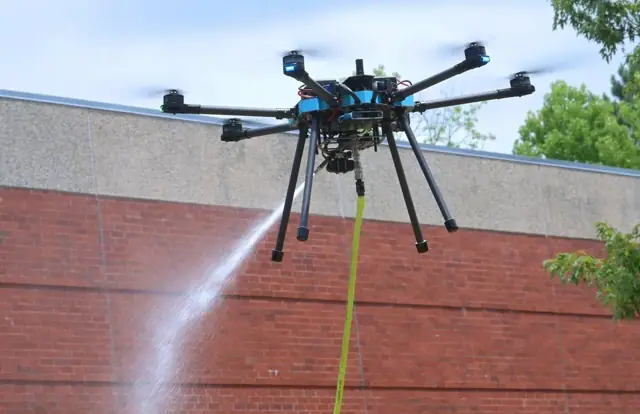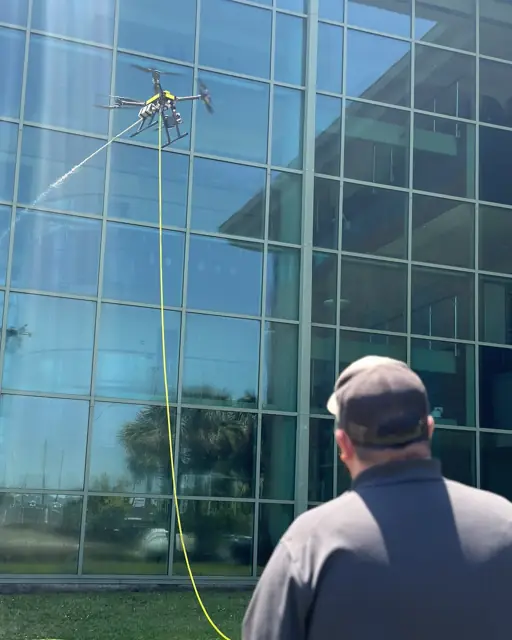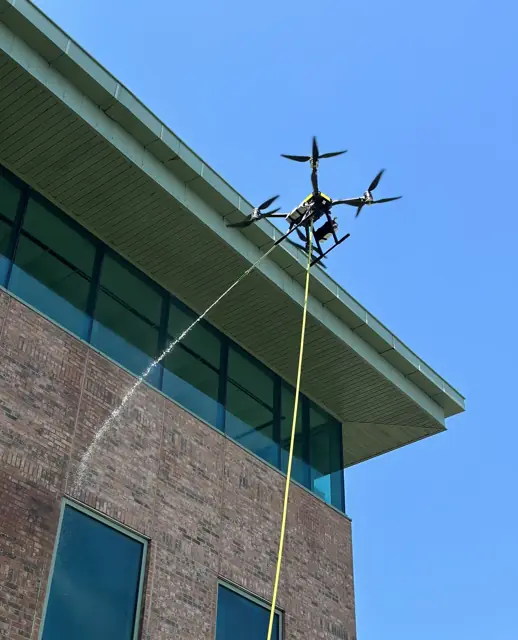

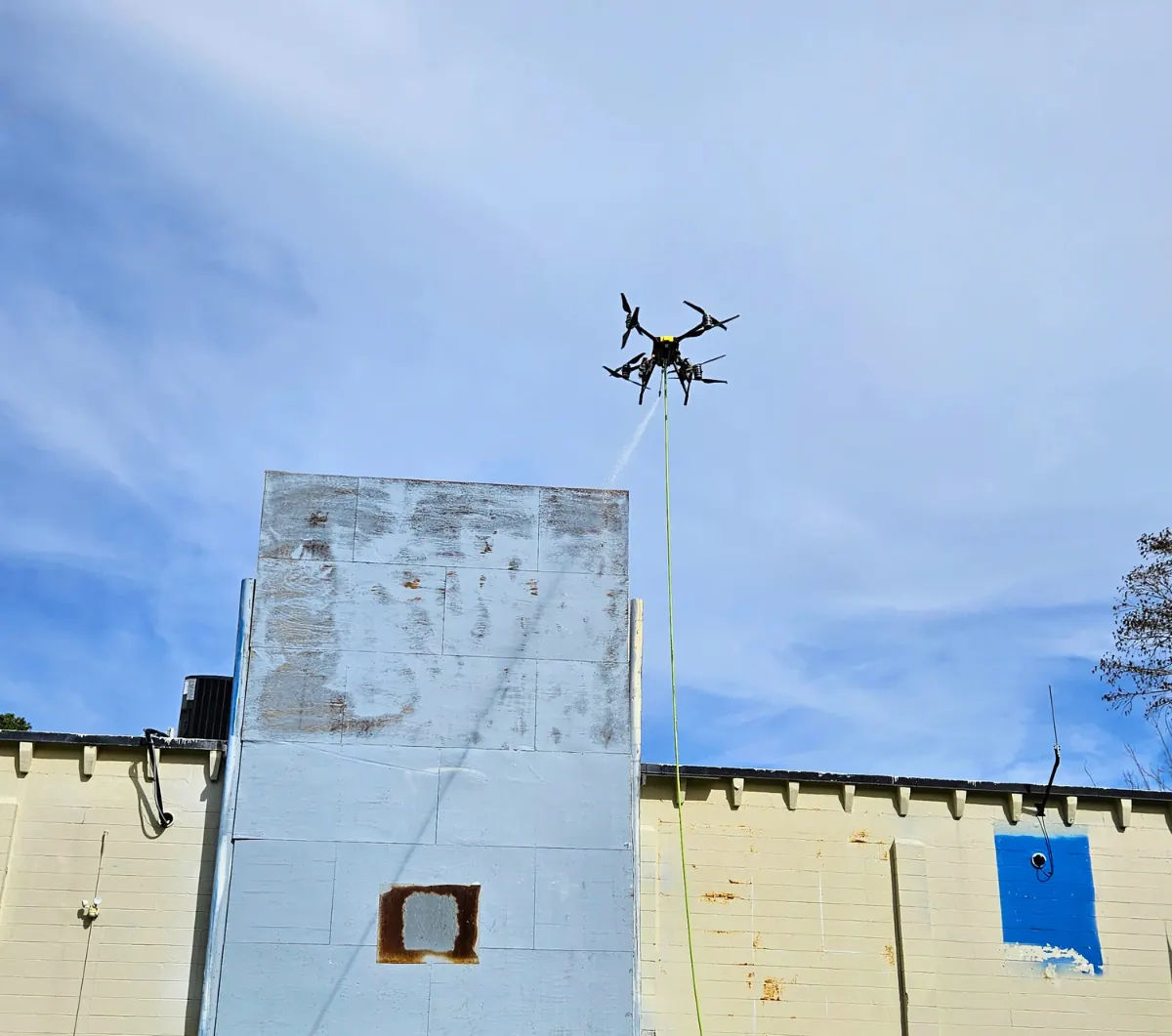
Drone window cleaning works by flying a spray drone along the outside of a building while the pilot stays on the ground. The drone washes the glass with deionized water and a safe cleaning solution. The job runs in steps: pre-inspection, flight planning, cordoning off the area below, cleaning, final inspection and photos.
What a drone window wash actually is
A cleaning drone is a flying spray tool. It carries a nozzle and is typically fed by a hose from a water system on the ground. The pilot stands on the ground with a controller and keeps the drone in sight the whole time.
The drone sprays deionized water, which is water with the minerals taken out, along with a safe cleaning solution where the dirt calls for it. There is no scaffolding, no swing stage, no rope access and no lift. Nobody hangs off the side of the building.
Drone Sky Cleaners follows the same order of work on every job. Here is each step and what it means for you as the person responsible for the building.
Step one: the pre-inspection
The job starts with a look at the building. The crew checks the height, how much glass there is, and how each side can be reached from the ground. They look at what the windows are dirty with. Dust and rain marks wash off differently than bird droppings or residue left over from construction.
They also note things that affect flying: trees, power lines, flagpoles, signs, balconies, awnings and nearby buildings. Open windows, loose seals and damaged caulking get flagged at this point, because sprayed water should not be aimed at a seal that has already failed.
Step two: flight planning
Next the pilot plans the flight. That means deciding where the drone takes off, the path it follows across each face of the building, and where the ground equipment sits. The plan also sets the order of the sides, often based on the sun and wind direction that day.
Airspace is part of the plan. In the United States, commercial drone work is flown under FAA Part 107, which calls for a certified remote pilot, a registered drone and authorization in controlled airspace near airports. In Canada, Transport Canada drone rules call for a certified pilot, a registered drone and airspace clearance where needed. Rules change, so operators must check the current rules before each job.
Step three: cordoning off the area below
Before the drone leaves the ground, the crew blocks off the area under the work zone. Cones, tape and signs keep people and cars out of the space where water will fall. On a storefront this might be a short strip of sidewalk. On a tower it can be a section of plaza or a row of parking spots.
This is the step tenants notice most, so it helps to tell them ahead of time. A short notice that says which side is being cleaned and when keeps doors, patios and loading areas clear.
Step four: the cleaning
The drone lifts off and works the building in passes, usually from the top down so dirty water runs over glass that has not been cleaned yet. The pilot holds the drone at a steady distance from the glass and moves it across each row of windows.
The spray loosens the dirt and rinses it away. Because deionized water has no minerals in it, it dries without leaving spots, so the glass does not need to be squeegeed by hand. Frames, sills and the surface around the glass get rinsed in the same pass.
- A crew member watches the cordoned area and the space around the drone
- The hose is managed from the ground so it does not drag across the building
- Battery changes create natural pause points between sections
Step five: final inspection, photos and the next booking
When the last side is done, the crew checks the result. Any panes that still show marks get another pass. Heavy staining, such as mineral deposits that have sat on the glass for a long time, may need a second pass, and a good crew will tell you that plainly.
You then receive before-and-after photos. These are useful for your records, for owners who are not on site, and for comparing one clean to the next. The last step is booking the next clean, so the building stays on a schedule instead of waiting until the glass looks bad.
What can delay or limit a drone wash
Drones do not fly in every condition. Strong or gusty wind, rain and freezing temperatures can push a job to another day. Buildings near airports may need airspace authorization first, which adds lead time. Very tight gaps between buildings can limit how close the drone can get to some sections.
None of this is unusual. It is simply planned for. If you want to know how these steps would apply to your building, request a quote from Drone Sky Cleaners. Quotes are priced per building after looking at its height, glass area and access.
Common questions
Does anyone need to go on the roof or inside the building?
In most cases, no. The pilot and crew work from the ground outside. You may be asked to make sure windows are closed and to share a site contact, but tenants can usually keep working while the drone cleans.
Do people inside notice the drone?
They may see it pass the window and hear a hum for a short time. The drone moves on quickly because it cleans in steady passes. Letting tenants know the date ahead of time avoids surprises and closed blinds help with privacy.
What should I do to prepare my building for a drone clean?
Close all windows, tell tenants which sides are being cleaned, and clear cars or furniture from the area that will be cordoned off. Point out any leaking seals or cracked panes you already know about so the crew can plan around them.