
Hard water stains on windows are mineral deposits left behind when water dries on glass. Sprinklers and runoff from concrete or masonry are the usual sources. Washing with purified water avoids adding new deposits and can lift light, fresh spotting. Older stains that have bonded to or etched the glass need restoration work.
What hard water stains are
Tap water, well water and irrigation water carry dissolved minerals, mainly calcium and magnesium. When a drop dries on glass, the water leaves and the minerals stay. One drop leaves a faint ring. The same spot wetted and dried day after day builds a chalky white crust.
That is why these marks do not wipe off like dust. They are a thin layer of rock stuck to the pane. Left long enough, the deposit can react with the glass surface itself.
Building managers often mistake mineral staining for a bad cleaning job. The glass was washed, it looked fine wet, and the white marks reappeared as it dried. That pattern points to minerals, not missed dirt.
Where the minerals come from
On commercial and residential buildings, the source is usually easy to find once you look at the pattern of the staining.
- Sprinklers: an arc of spotting across ground-floor glass, heaviest where a head points at the window
- Runoff from concrete, brick or stone: white streaks below sills, ledges and precast panels, where rain picks up minerals on the way down
- Hose rinsing: spots across a whole pane after someone washed it with tap water and let it dry in the sun
- Drips: a single trail under a leaking gutter, an overflow pipe or equipment that sheds water
- Pools and fountains: splash and mist on nearby glass
Why purified water avoids adding more
Deionized water has had its dissolved minerals removed. When it dries on glass, there is nothing left behind to form a spot. That is the reason professional exterior cleaning uses it for the wash and the rinse.
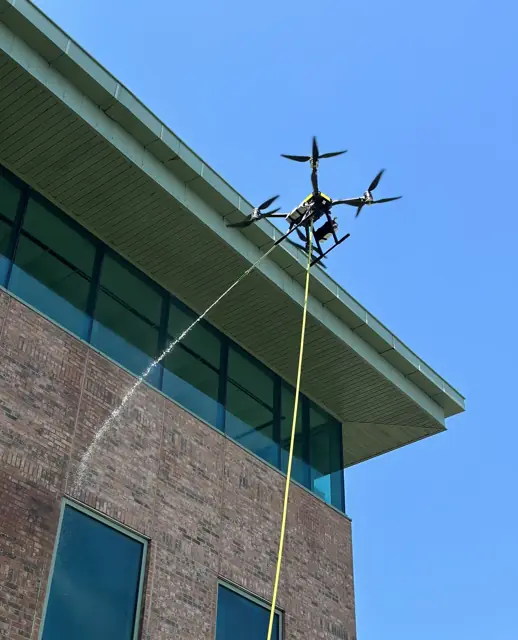
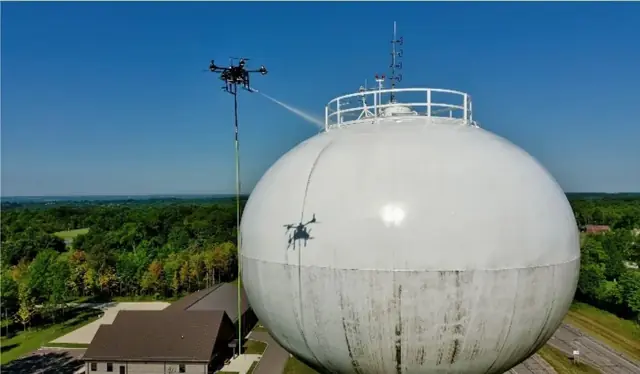
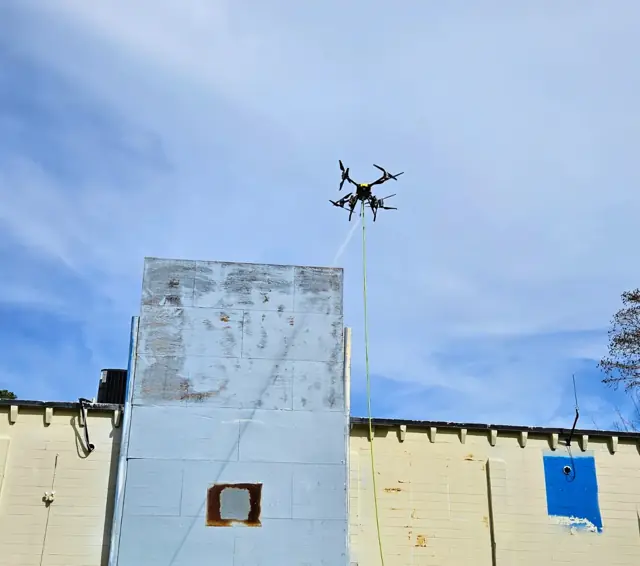
Drone Sky Cleaners washes with deionized (purified) water and a safe cleaning solution. On glass with no mineral problem, that means the rinse dries clear. On glass with light, recent spotting, a proper wash can lift a good share of it. What it will not do is add a fresh layer, which is what a tap-water hose-down does every time.
Fresh spotting versus bonded or etched glass
Mineral staining comes in stages, and the stage decides the fix. Fresh deposits sit on top of the glass. They feel slightly rough under a fingertip and usually respond to cleaning.
Older deposits bond tightly to the surface. Past that, the glass itself becomes etched: the surface is pitted, and a hazy outline stays even after the mineral is gone. A simple check is to clean a small test patch properly. If it comes up clear, you have surface deposits. If a white haze remains once the patch is clean and dry, you are past the washing stage.
When staining needs restoration work
A wash alone will not fix bonded or etched staining. This is true of a drone wash, a water-fed pole and a squeegee alike. Heavy mineral staining calls for restoration, which is a separate, hands-on trade.
Restoration is slower and more involved than washing, and it is usually quoted separately by a glass restoration specialist. Results depend on how deep the damage goes. Coated and tinted glass needs extra care, so check with the glass manufacturer or installer before any abrasive method is used.
- Mineral deposit removers applied and worked in by hand
- Mechanical polishing of the glass surface
- In severe cases, replacement of the pane
Stop the source first
Restoring glass while the sprinkler still hits it every morning is money spent twice. Deal with the water before you deal with the stain.
- Re-aim or swap sprinkler heads so they miss the glass
- Repair leaking gutters, overflows and dripping fixtures
- Ask a building envelope contractor about runoff from masonry above windows
- Never rinse windows with a garden hose and leave them to air dry
- Keep a regular cleaning schedule so new deposits come off while they are still fresh
How a drone wash fits in
Regular washing with purified water is maintenance. It removes dirt and fresh spotting before they harden, and it does not contribute minerals of its own. It is not a cure for glass that has been stained for years.
The pre-inspection is where staining gets looked at and discussed, so you know what to expect before the drone flies. Heavier areas may need a second pass, and some panes will be flagged for restoration. Before-and-after photos show what moved. Quotes are priced per building after a look at its height, glass area and access.
Common questions
Will vinegar remove hard water stains from windows?
Mild acids like vinegar can soften light, fresh deposits on a small household window. They do little for bonded staining and nothing for etched glass. On a commercial building, test one small area before spending time on the rest.
Why do the spots come back after every cleaning?
Because the water source is still there. A sprinkler head, a dripping gutter or runoff from a ledge re-wets the glass and leaves new minerals each time it dries. Fix the source and the spotting stops returning.
Can a drone remove hard water stains from high windows?
A drone wash can lift light, recent mineral spotting and will not add more, since it uses purified water. Staining that has bonded to or etched the glass needs hands-on restoration. The pre-inspection will tell you which you have.