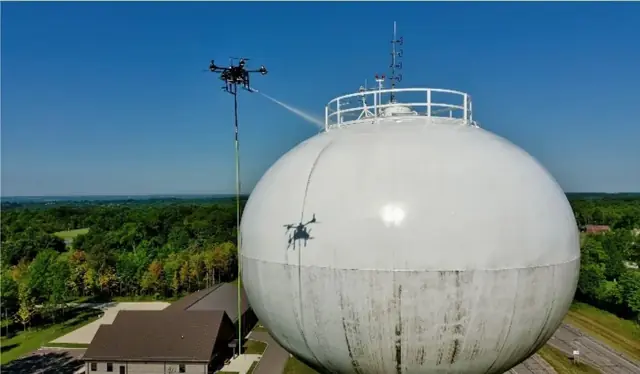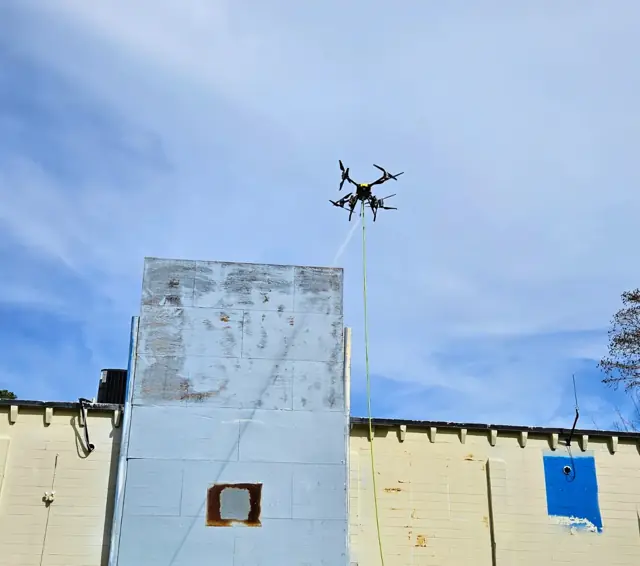

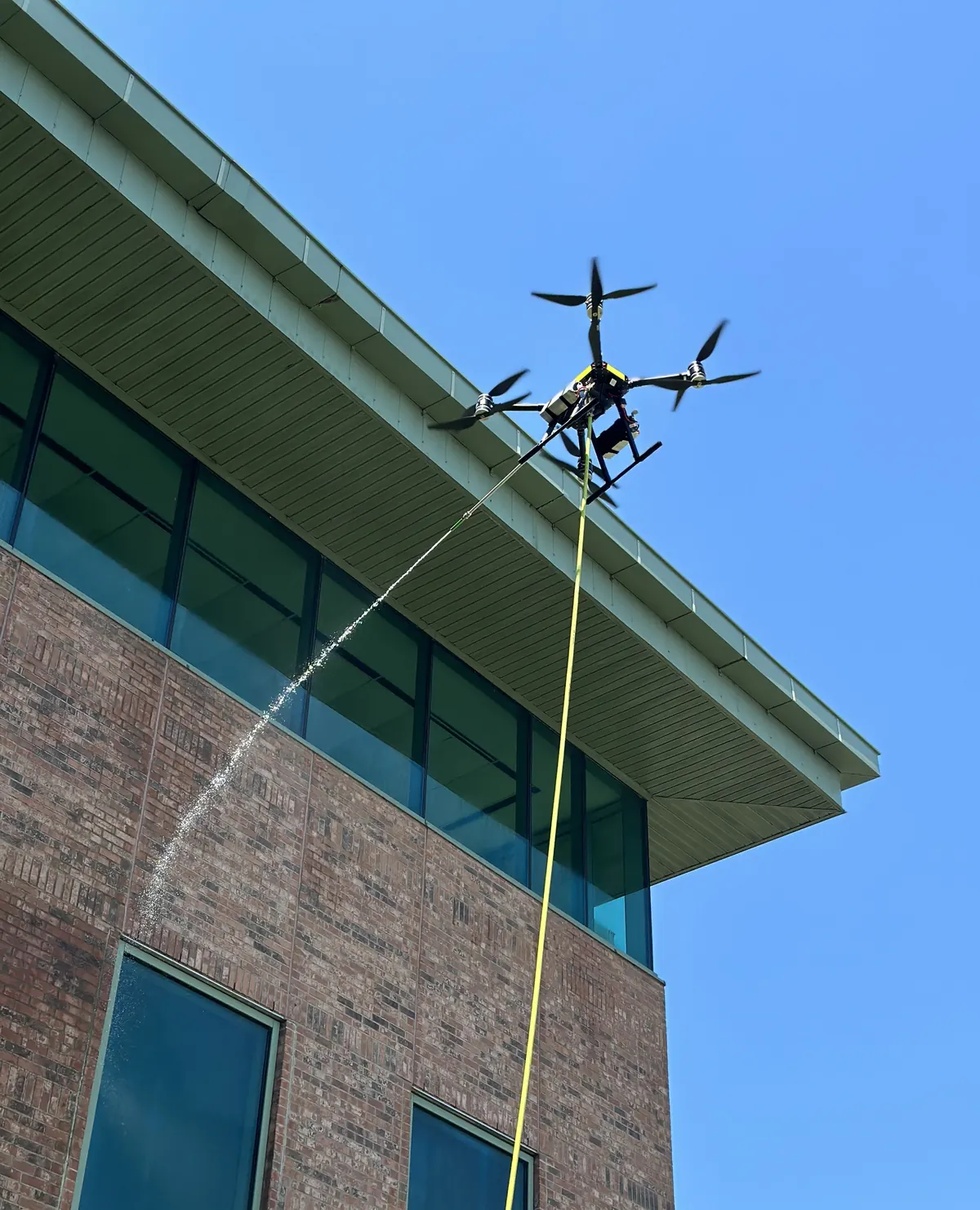
Algae on a building exterior grows where a surface stays damp, shaded and lightly dirty. Spores arrive on the wind and feed on moisture and dust. A low pressure wash with a suitable cleaning solution removes it. Because spores keep arriving, growth returns over time, so a regular cleaning schedule is what keeps it under control.
What the green and black marks really are
The green film on a north wall and the black streaks down a roof are living things. Algae usually shows as a green or dark coating. Mold and mildew tend to appear as black, gray or brown spots and patches. Lichen and moss can follow later, once there is something to hold on to.
They often grow together, and from the ground they are hard to tell apart. For a property manager the label matters less than the fact that it is alive. Dirt sits on a surface. Growth attaches to it and spreads.
Why growth picks certain walls and roofs
Spores are in the air everywhere. They only take hold where conditions suit them, which is why one side of a building can be spotless while another turns green.
Growth needs moisture that lingers, limited direct sun and a little food. Dust, pollen and pollution film provide the food. Rough or porous materials such as stucco, concrete, brick and textured panels give spores a grip and hold water longer.
- Walls that face away from the sun and dry slowly.
- Areas shaded by trees or by a taller neighboring building.
- Surfaces below leaking gutters, overflow pipes and air conditioning drips.
- Ledges, sills and panel joints where water sits.
- Roof slopes that stay damp with morning dew.
- Lower walls splashed by sprinklers or rain bouncing off the ground.
What happens if you leave it
The first effect is appearance. A streaked facade makes a well run building look neglected, and tenants and visitors notice.
Over a longer period, growth keeps the surface underneath damp. Damp materials wear faster. Paint and coatings can stain, sealant joints stay wet, and on roofs a layer of moss can hold water against the covering and slow drainage. Growth near walkways and entrances can also make surfaces slippery when it spreads to the ground.
How fast any of this happens depends on the material and the climate. The general rule is simple. The longer growth sits, the more work it takes to remove.
How washing removes it
Blasting growth with high pressure is tempting and often a mistake. It can scar the surface and still leave the roots of the growth behind in the pores.
A better approach is a low pressure wash. A cleaning solution suited to the surface is applied, left to work on the growth, and then rinsed away. Rinsing with deionized water avoids mineral spots as the wall dries.
A drone can do this at height. It carries the spray up the facade or over the roof while the pilot stays on the ground, with no scaffolding, swing stage, rope access or lift. That is useful for exactly the spots where growth likes to hide: high shaded walls, upper ledges and roof slopes that are awkward to reach.
Why it comes back
A wash removes the growth that is there. It does not change the shade, the humidity or the wind that carries new spores. Given the same conditions, a clean wall will slowly start to green again.
This is normal, and it is not a sign of a bad cleaning. It is the same reason a lawn needs mowing more than once. The honest promise is a clean surface now and a slower return, not a permanent fix.
Heavy, long established growth can also leave a shadow after the first wash. A second pass often deals with it. Some old staining in porous material may stay faintly visible.
How a schedule keeps growth in check
The practical answer is to clean on a rhythm that suits the building. Washing while growth is still a light film is quicker and gentler than waiting until it is thick and dark.
How often depends on your climate, the amount of shade and the material. A humid, tree lined site will need attention more often than a dry, open one. Watching one or two known trouble spots tells you when the next clean is due.
Drone Sky Cleaners finishes each job with a final inspection, before-and-after photos and booking the next clean. Those photos become a record that shows how quickly growth returns on your building, which makes the schedule easier to set.
Small fixes that slow regrowth
A few maintenance jobs help between washes. Repair leaking gutters and downpipes. Redirect sprinklers that hit the wall. Trim branches that shade the facade and drop debris on the roof. Clear ledges and roof valleys where leaves collect.
None of these stops growth entirely, but each one removes some of the lingering moisture that growth depends on.
Common questions
Is the growth on my building a health concern?
Exterior algae and mildew are mostly an appearance and maintenance issue. If you see mold indoors or suspect water is getting through the wall, that is a different problem and worth having checked by a building professional.
Does the season affect when to wash off algae?
Growth is most active in mild, damp weather. Many owners schedule a wash once that damp season has passed, so the surface starts the drier months clean. Flights also depend on calm, dry conditions on the day, so some flexibility helps.
Can a drone clean algae off a roof as well as walls?
Yes. Roofs are one of the surfaces drones wash, using low pressure so the covering is not damaged. Thick moss may need more than one treatment, and the pre-inspection will show whether any areas need a different approach.