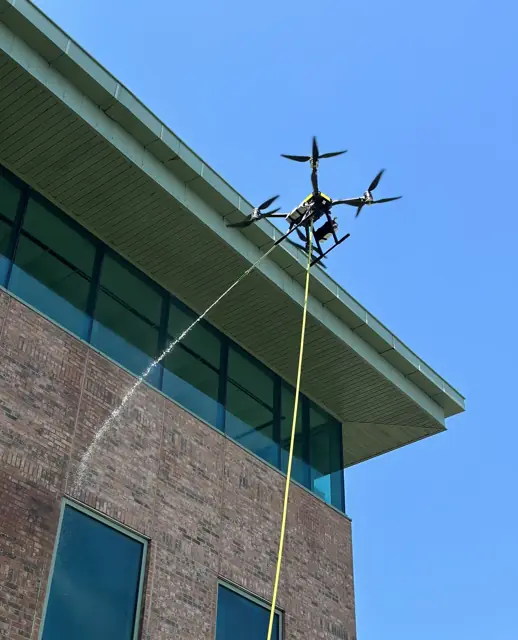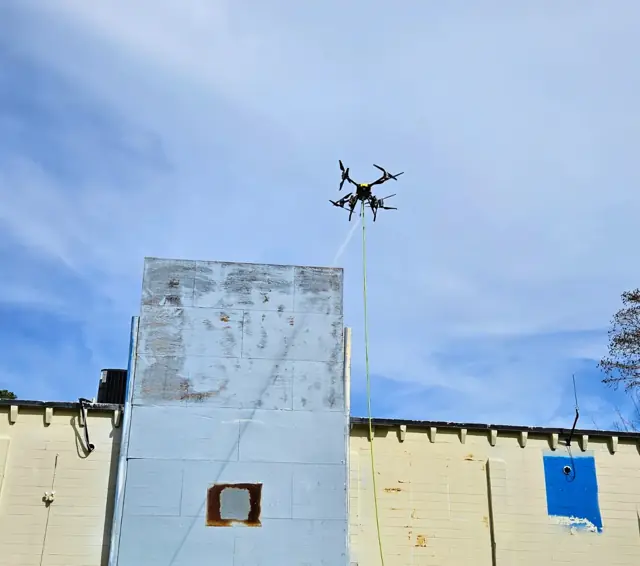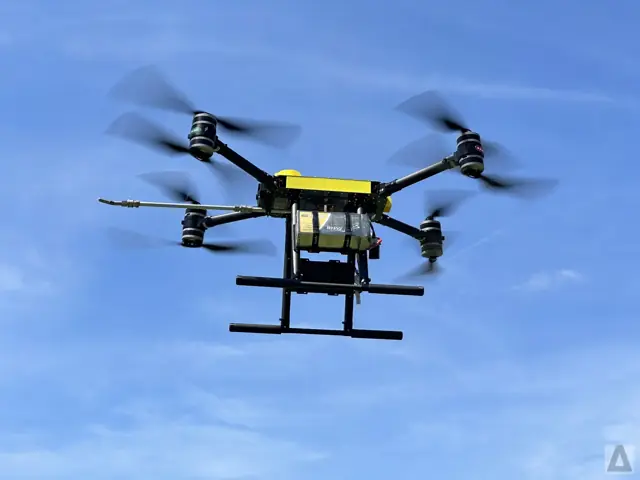

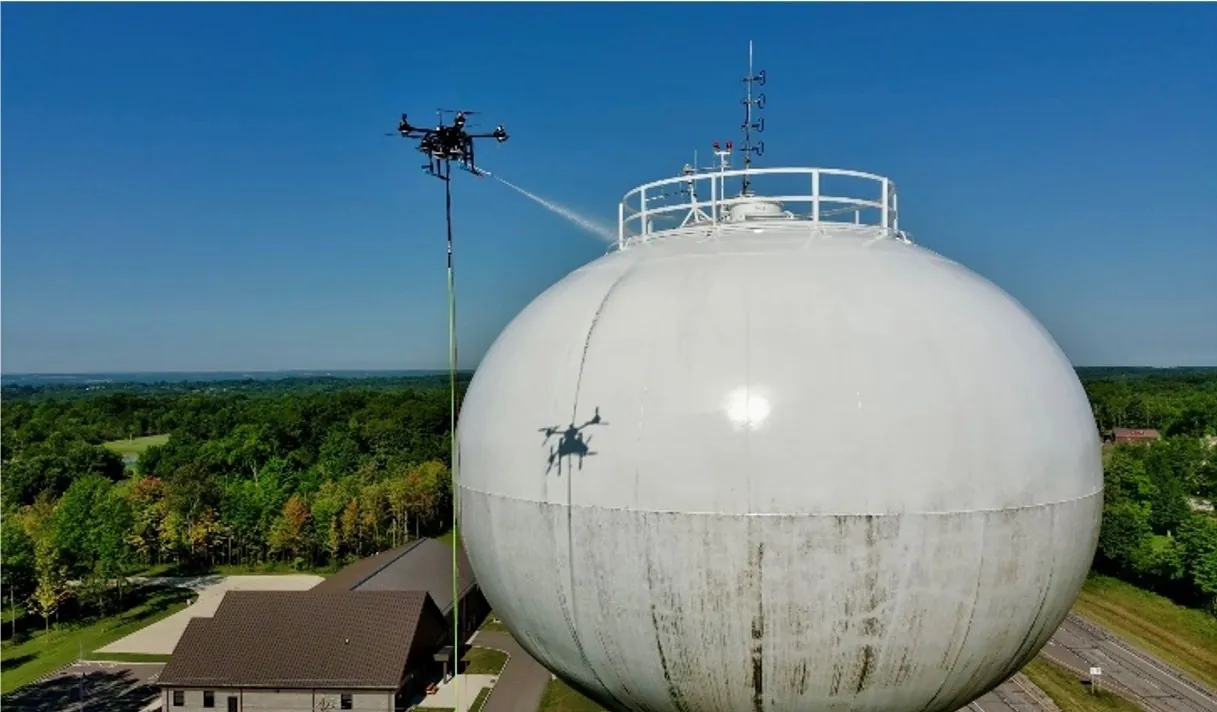
Campus building cleaning with drones works by treating the site as one planned project. The crew maps a route from building to building, schedules each one around patients, classes and deliveries, cordons off the ground below, and keeps the facilities team informed each day. The pilot stays on the ground and no scaffolding is needed.
Why a campus is different from a single building
A campus is a small town. A university might have teaching blocks, labs, a library, residences and a sports hall. A hospital site adds wards, clinics, an emergency entrance, a parking structure and a plant building. They vary in height, age and material, and people move between them all day.
Traditional access makes this hard. Scaffolding or lifts have to be set up, taken down and moved for every building, and each setup blocks paths and entrances for days.
A drone crew is lighter on the ground. The drone washes windows, facades and roofs with deionized water and a safe cleaning solution while the pilot stays below. Moving to the next building means moving a small team and its equipment, not a structure.
Planning the route across the site
The first job is a walk of the whole campus with the facilities team. This pre-inspection sets the order of work and finds the problems before they cost a day.
A good route groups buildings that sit close together, follows the water supply, and avoids crossing the busiest paths more than it has to. It also sets priorities. The main entrance, the visitor facing buildings and anything visibly stained usually come first.
- Where the pilot can stand with a clear view of each facade.
- Where water can be connected near each building.
- Which paths, doors and drop off points sit below the work.
- Trees, lamp posts, cables, flagpoles and rooftop equipment.
- Courtyards and narrow gaps between buildings.
- Areas that need a quiet time of day.
Working around patients on a hospital site
A hospital never closes, so the plan has to fit around care. The emergency entrance and ambulance routes stay open at all times. Work near them is timed and positioned so that nothing is blocked.
Privacy matters as well. Staff should know which wards are being washed and when, so blinds can be closed and patients are not surprised by a drone outside the window. Some units need extra thought, such as intensive care, maternity, mental health and anywhere patients are resting during the day.
Many hospitals have a helipad. Any flying on that site must be coordinated with the hospital and cleared in line with current airspace rules, and the crew must be able to stop and land at once when asked.
Air intakes are worth a mention too. Ask the facilities team where the building draws in fresh air, so spraying nearby can be planned with them.
Working around students and staff
Universities and colleges run on a timetable, which helps. Foot traffic surges at class changes and drops in between. Breaks between terms, reading weeks and summer are often the calmest time for the busiest buildings.
Exams need quiet, so buildings used as exam halls are scheduled around those dates. Residences come with their own privacy concerns, and students should get notice before windows on their floor are washed.
Expect curiosity. A drone washing a library draws a crowd with phones out. A clear cordon and a crew member watching the edge of it keeps people at a safe distance without fuss.
Deliveries, parking and the ground below
Every drone clean includes cordoning off the area below. On a campus that area is often a loading dock, a bus stop, a bike rack or an accessible parking bay.
The plan should say what closes, for how long, and what the alternative is. Deliveries can be shifted by an hour if the kitchen or pharmacy knows in advance. Accessible routes must always have a signed alternative. Parked cars under a facade should be moved or the section scheduled for when the bays are empty.
Communication with the facilities team
On a campus, communication is most of the job. One named contact on each side keeps it simple.
A typical rhythm looks like this. A schedule is shared ahead of time and passed on to building managers, security and department heads. Notices go up at affected entrances. Each morning the crew confirms the plan for the day with facilities. Security knows where the drone is flying. Each evening there is a short update on what was finished and what moved.
Drone Sky Cleaners closes each building with a final inspection and before-and-after photos, which gives the facilities team a record for every building on the list.
Limits to build into the schedule
Wind and bad weather delay flights, so a campus program needs spare days. Heavy staining may need a second pass. In the United States, commercial drone work is flown under FAA Part 107, and in Canada under Transport Canada drone rules, with a certified pilot and a registered drone. Rules change, and operators must check the current rules for each site.
Quotes are priced per building after looking at height, glass area and access.
Common questions
Can a campus be cleaned in phases instead of all at once?
Yes. Many campuses split the work by zone or by priority, starting with the most visible buildings. Phasing also lets you fit the work into quiet periods and spread it across a maintenance calendar that suits your team.
Do windows need to be closed during a drone wash?
Yes. Windows and vents on the facade being washed should be closed before the crew starts. On a campus this is usually handled through notices to occupants and a quick check by building staff on the morning of the clean.
Does the drone record video of people inside the buildings?
The drone is there to wash, and the before-and-after photos document the exterior surfaces. Raise any privacy requirements with the crew during planning so they can be written into the schedule and the notices sent to occupants.