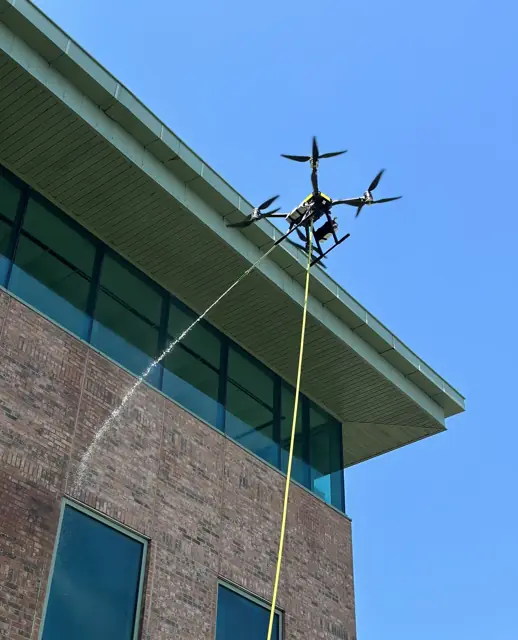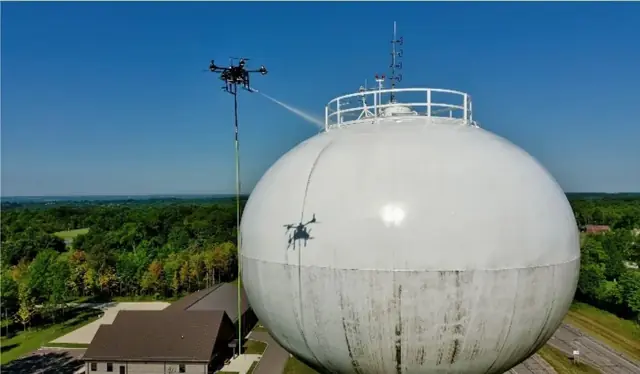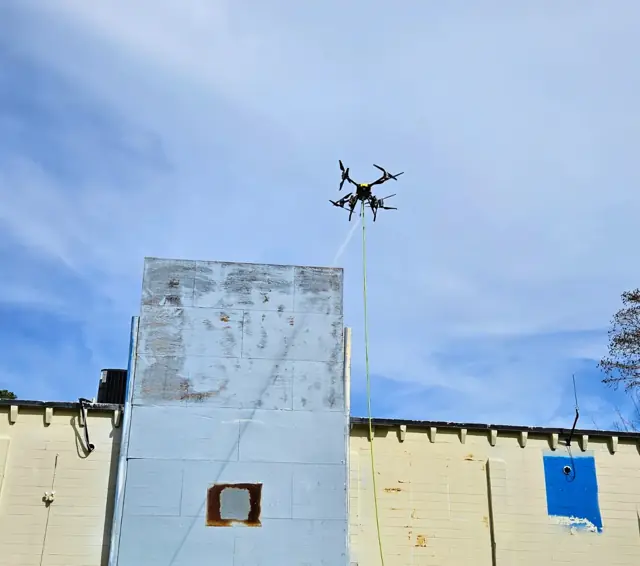

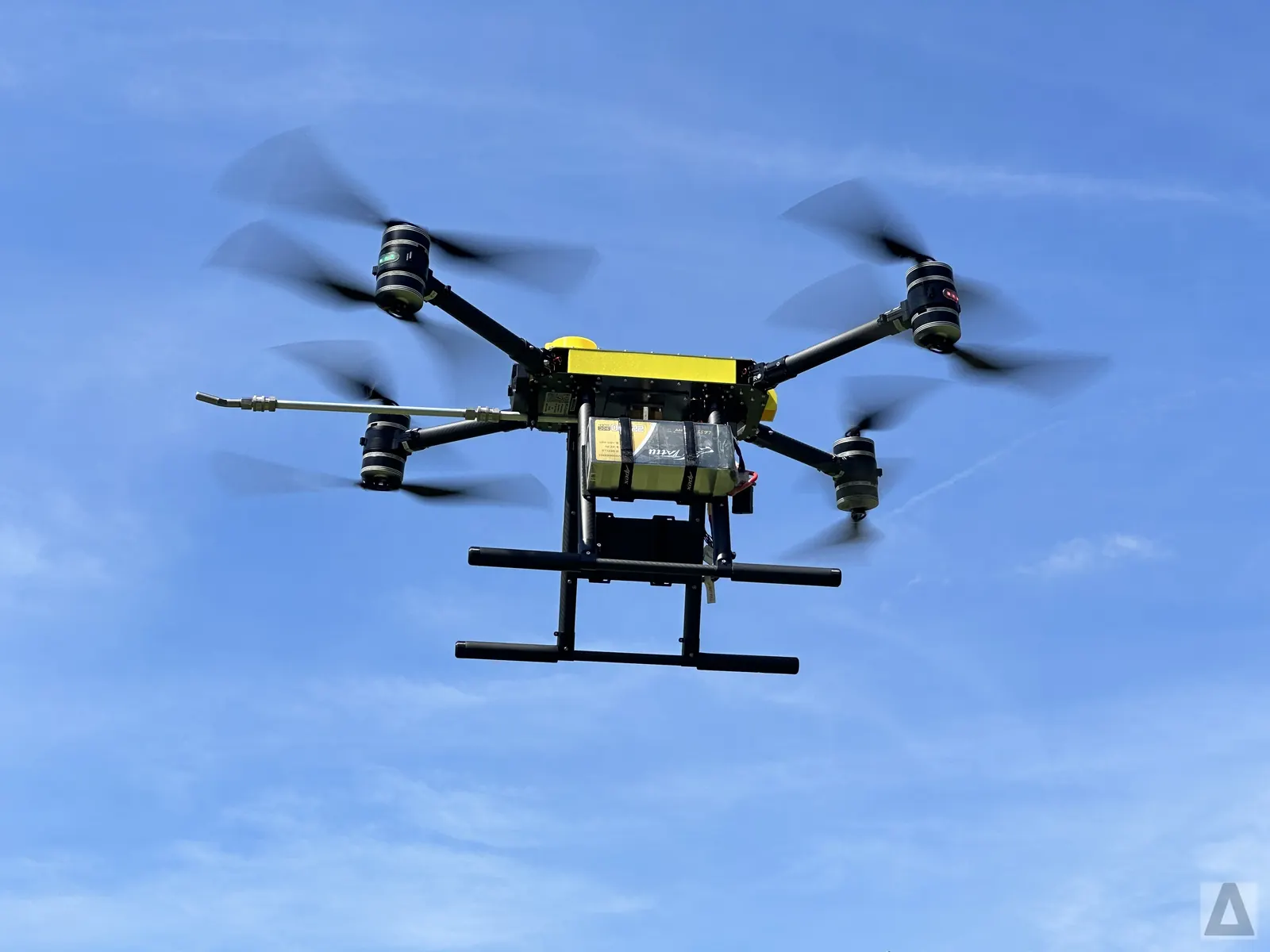
Commercial drone cleaning washes a building's windows and facade with a drone while the pilot stays on the ground. As a property manager, your job is to share building details for the quote, notify tenants, clear the ground below the work area and arrange site access. The crew handles inspection, flight planning and cleaning.
What commercial drone cleaning means for your building
Commercial drone cleaning replaces the equipment that usually hangs off or leans against a building. There is no scaffolding to erect, no swing stage to rig from the roof and no lift parked on the sidewalk. A drone washes the glass and facade with deionized water and a safe cleaning solution.
For a property manager, the practical change is on the ground. Your tasks shift from coordinating roof access and equipment storage to managing a clear zone below the drone and keeping tenants informed.
It also changes the calendar. Rigging a platform can take longer than the cleaning itself. With a drone, setup is mostly a cordon and a flight check, so the crew spends its time on site washing the building.
What to send when you ask for a quote
Drone Sky Cleaners prices each building individually after looking at its height, glass area and access. The more you share up front, the faster that goes.
- The address and the number of floors.
- Which elevations need cleaning and roughly how much of each is glass.
- Photos of every side, including anything that sits close to the facade such as trees, awnings or signage.
- What is at ground level below each side: sidewalks, patios, parking, entrances.
- Any known constraints, such as a nearby airport, a helipad or overhead lines.
- When the building was last cleaned and how.
Preparing the site
Walk the property with the ground zones in mind. The crew cordons off the area below the drone, so think about what sits there. Parked cars may need to move. Patio furniture, planters and sandwich boards should come in. Loading docks and deliveries may need a short pause on one side of the building.
Ask the crew ahead of time what they need on site, such as where to set up, where to park and who to call for access. Give your security or front desk team the crew's contact details and the planned start time.
Check the building itself too. Look for open or broken windows, loose screens, fresh sealant and any facade repairs in progress. Flag these to the crew before the visit so the flight plan can work around them.
Scheduling around tenants
Tenants mostly want to know three things: when, which side and what they need to do. A short notice a few days ahead covers it. Ask them to close windows, bring items in from balconies and expect a drone outside the glass for a short period.
Pick times that fit the building. An office tower may suit early mornings or weekends, when foot traffic at the entrances is light. A residential building may prefer mid-morning on a weekday. Retail at street level usually wants its storefront side done before opening. Build in a backup date, because wind or rain can push a clean.
If the building has a concierge, a tenant app or lobby screens, post the schedule there as well. People read a notice in the elevator more often than an email.
What to expect on the day
The day follows a set order, and you can plan your own staff around it.
- Pre-inspection: the crew checks the facade, the weather and the ground conditions.
- Flight planning: the route is confirmed for each elevation.
- Cordoning off: barriers and signs go up below the first work area.
- Cleaning: the drone washes one section at a time and the cordon moves with it.
- Final inspection: the crew reviews the result and touches up where needed.
- Photos: you receive before-and-after images for your records.
- Next clean: the following visit can be booked before the crew leaves.
Limits to plan around
Drones do not fly in every condition. Wind, rain and poor visibility can delay work, sometimes on the morning of the job. Heavy staining, such as long-neglected mineral runoff, may need a second pass. Buildings near airports may need airspace authorization, which the operator arranges before the flight.
Commercial drone work is regulated. In the United States it is flown under FAA Part 107, and in Canada under Transport Canada's drone rules. Both call for a certified pilot and a registered drone. Rules change, so operators must check the current requirements.
None of this needs to be a surprise. Ask the crew how they make the call on weather and how much notice you will get, then pass that on to tenants in your first message.
Common questions
Do tenants have to leave their units during the clean?
No. Tenants can stay inside and carry on as normal. They only need to keep windows closed on the side being washed and stay off balconies while the drone is working there. The cordoned area is on the ground outside.
Who is responsible for notifying tenants?
The property manager usually sends the notice, because you hold the tenant contact list and know the building's routines. The cleaning crew can supply the schedule and a simple description of the work for you to pass along.
What should I keep on file after the job?
Keep the before-and-after photos, the date, the elevations cleaned and any notes from the final inspection. That record is useful for ownership reports, budgeting the next cycle and showing the condition of the facade over time.