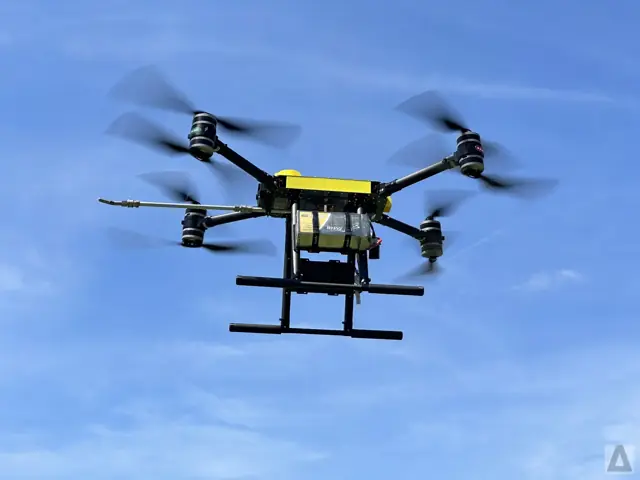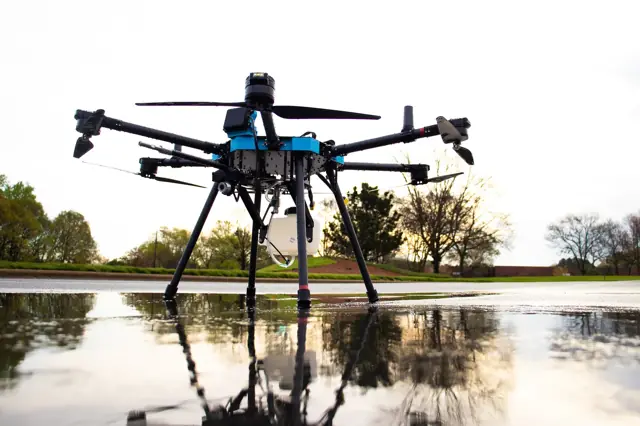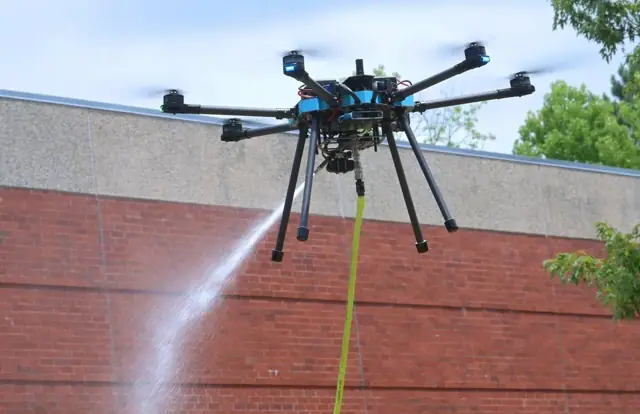

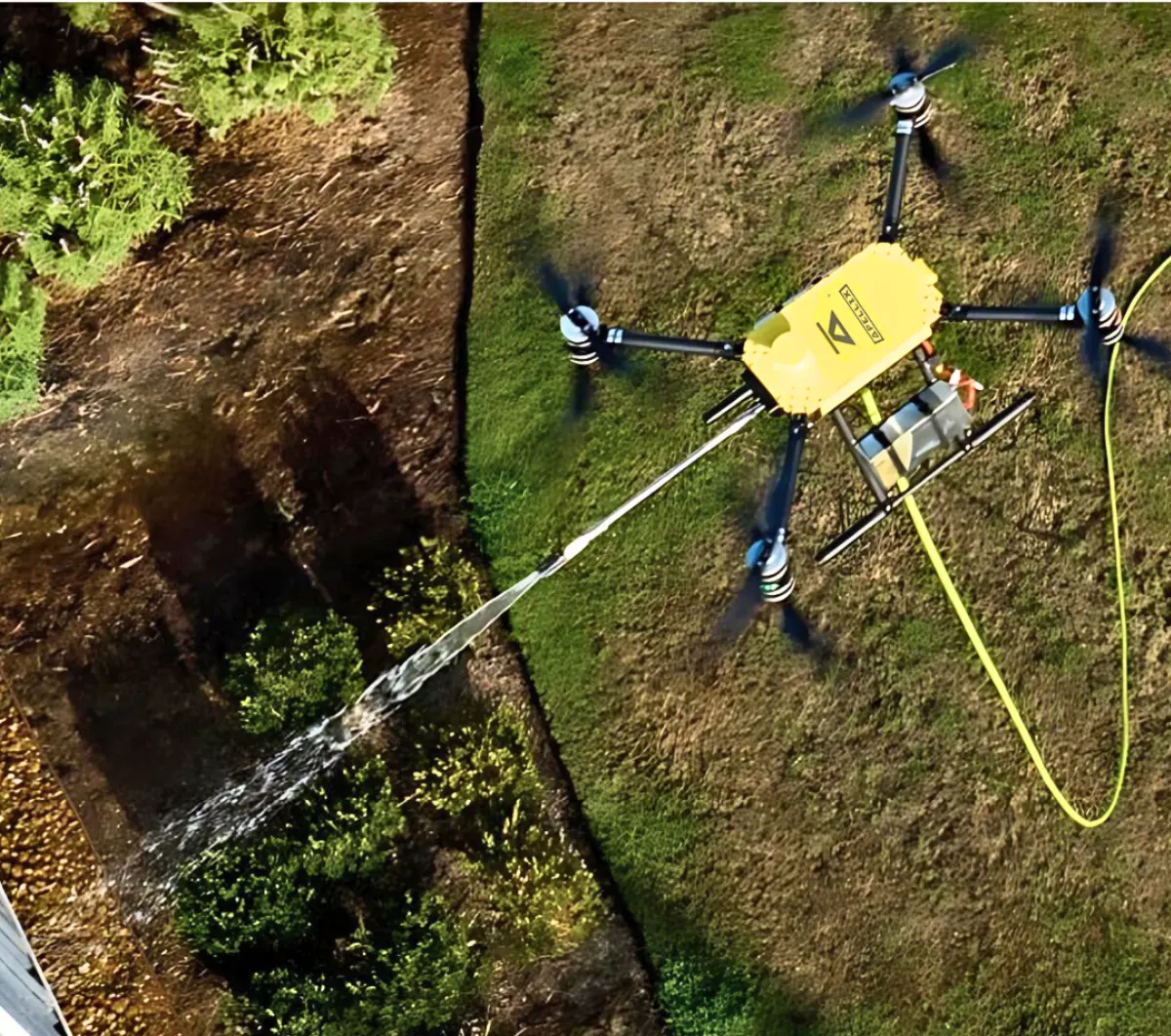
Drone solar panel cleaning uses a drone to rinse dust, pollen and bird droppings off solar arrays with deionized water and a safe cleaning solution. The pilot stays on the ground, so nobody walks on the roof or the panels. It suits rooftop and ground-mounted systems, with limits in wind and bad weather.
Why dirty panels matter
A solar panel makes power from the light that reaches its cells. Anything sitting on the glass gets in the way. Dust, pollen, soot, leaves and bird droppings all block some of that light, and less light means less power.
Uneven dirt can be worse than an even film. A single patch of droppings or a line of grime along the bottom edge shades part of the panel while the rest sits in full sun. Because cells are wired together, one shaded area can hold back the cells around it.
Does rain not clean them?
Rain helps with loose dust, but it rarely does the whole job. Low-tilt panels shed water slowly, so dirt settles along the lower frame and dries into a band. Bird droppings and tree sap bake on in the sun and stay put through a storm.
In dry regions, or beside farms, gravel roads and construction sites, dust can build up faster than the weather removes it. That is when a planned wash makes sense.
A simple check is to look at the glass after a good rain. If you can still see a film, streaks or spots, the weather is not keeping up.
How a drone washes an array
The drone flies along the rows and sprays the glass from a short distance. It uses deionized water, which has had its minerals removed, along with a safe cleaning solution where the dirt calls for it. Nothing rigid scrapes across the glass.
The pilot works from the ground and watches the array through the drone's camera and in direct view. The crew plans the flight in advance so each row is covered in order and the spray runs off toward the low edge of the panels.
Because nobody climbs onto the array, there is no foot traffic on the panels or the roof around them, and no hoses dragged across the racking.
Why purified water is the point
Ordinary tap water carries dissolved minerals. When it dries on hot glass, the water leaves and the minerals stay behind as spots and haze. On a solar panel, that haze is one more thing between the sun and the cells.
Deionized water dries without leaving those deposits, so the panels can air-dry clean. It is the same reason purified water is used on high-rise windows. Check your panel maker's care guidance before any clean. Many set rules on water quality, pressure and cleaning products, and the crew should work inside them.
Rooftop arrays versus ground-mounted sites
The two settings pose different problems, and the plan changes with them.
- Rooftop access: getting people and hoses onto a roof is slow and adds fall risk. A drone reaches the array without anyone leaving the ground.
- Rooftop obstacles: vents, skylights, conduit and parapets sit close to the panels, so flight paths are tighter and planned around them.
- Ground-mounted scale: large sites have long rows and a lot of glass. The work is planned block by block so the site keeps producing while it is cleaned.
- Ground-mounted surroundings: dust from access roads, pollen from fields and growth under the racks all shape how often a wash is needed.
- Carports and canopies: panels above parked cars need the stalls below cleared and cordoned off first.
Limits you should know about
Wind is the main one. Gusts carry spray away from the glass and make precise flying harder, so crews hold off on windy days. Rain, lightning risk and freezing temperatures stop work as well.
Baked-on droppings, sap and lichen may need a second pass. Sites near airports can fall inside controlled airspace, which requires authorization before flying. In the United States, commercial drone work is flown under FAA Part 107. In Canada it falls under Transport Canada's drone rules. Rules change, so operators must check the current ones. A wash also will not repair a cracked panel or a wiring fault.
What to have ready for a quote
Drone Sky Cleaners prices each site after looking at its height, the surface to be washed and the access around it. For a solar job, it helps to share the type of mounting, a rough layout of the array and a few recent photos of the dirt.
The process is the same on every job: pre-inspection, flight planning, cordoning off the area below, cleaning, a final inspection, before-and-after photos and booking the next clean.
Common questions
How often should solar panels be cleaned?
It depends on the site. Arrays near farmland, unpaved roads, trees or large bird populations get dirty faster than panels in a clean, rainy area. A sensible approach is to inspect the glass each season and schedule washes when visible buildup returns.
Can cleaning affect my solar panel warranty?
It can if the method breaks the manufacturer's care instructions. Read the warranty terms for limits on pressure, water quality and chemicals, and share them with the cleaning crew before the job so the wash is planned to stay within those requirements.
What time of day is right for washing solar panels?
Cooler parts of the day are usually preferred, such as early morning or evening. Spraying cool water on very hot glass is hard on the panel, and water evaporates quickly in midday heat, which makes rinsing less effective.