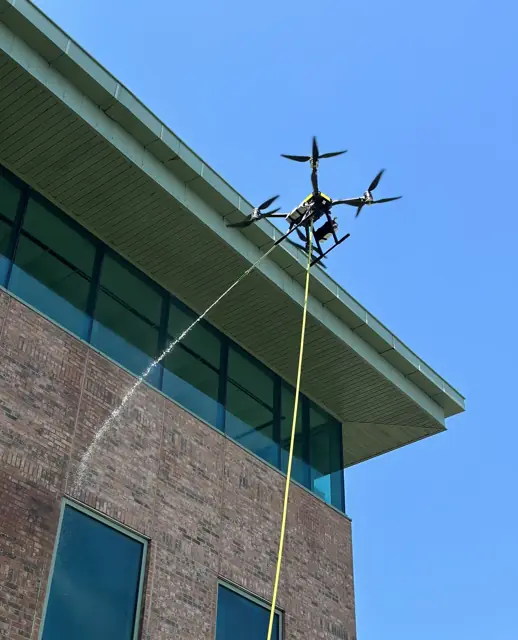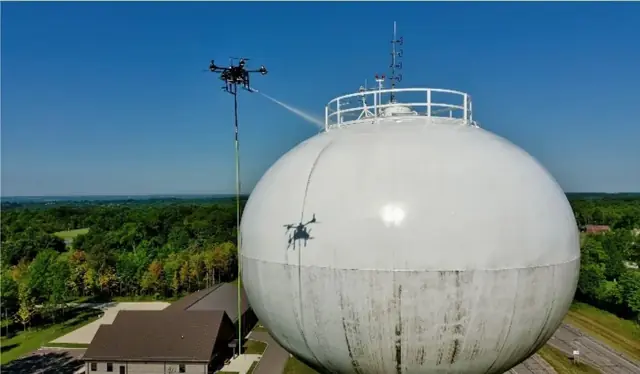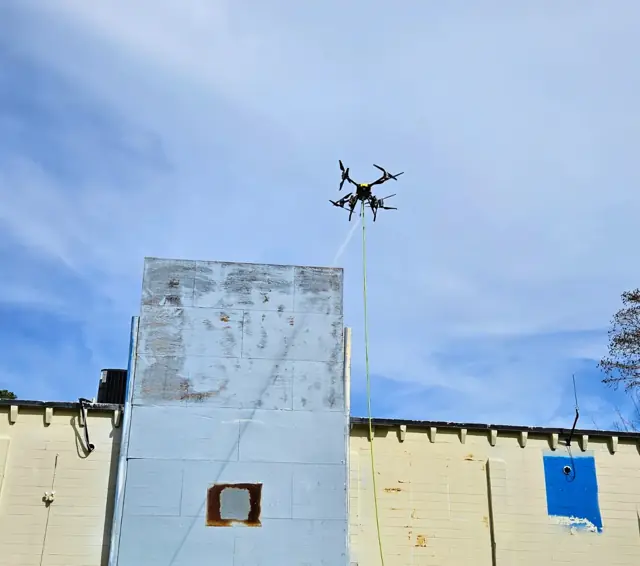

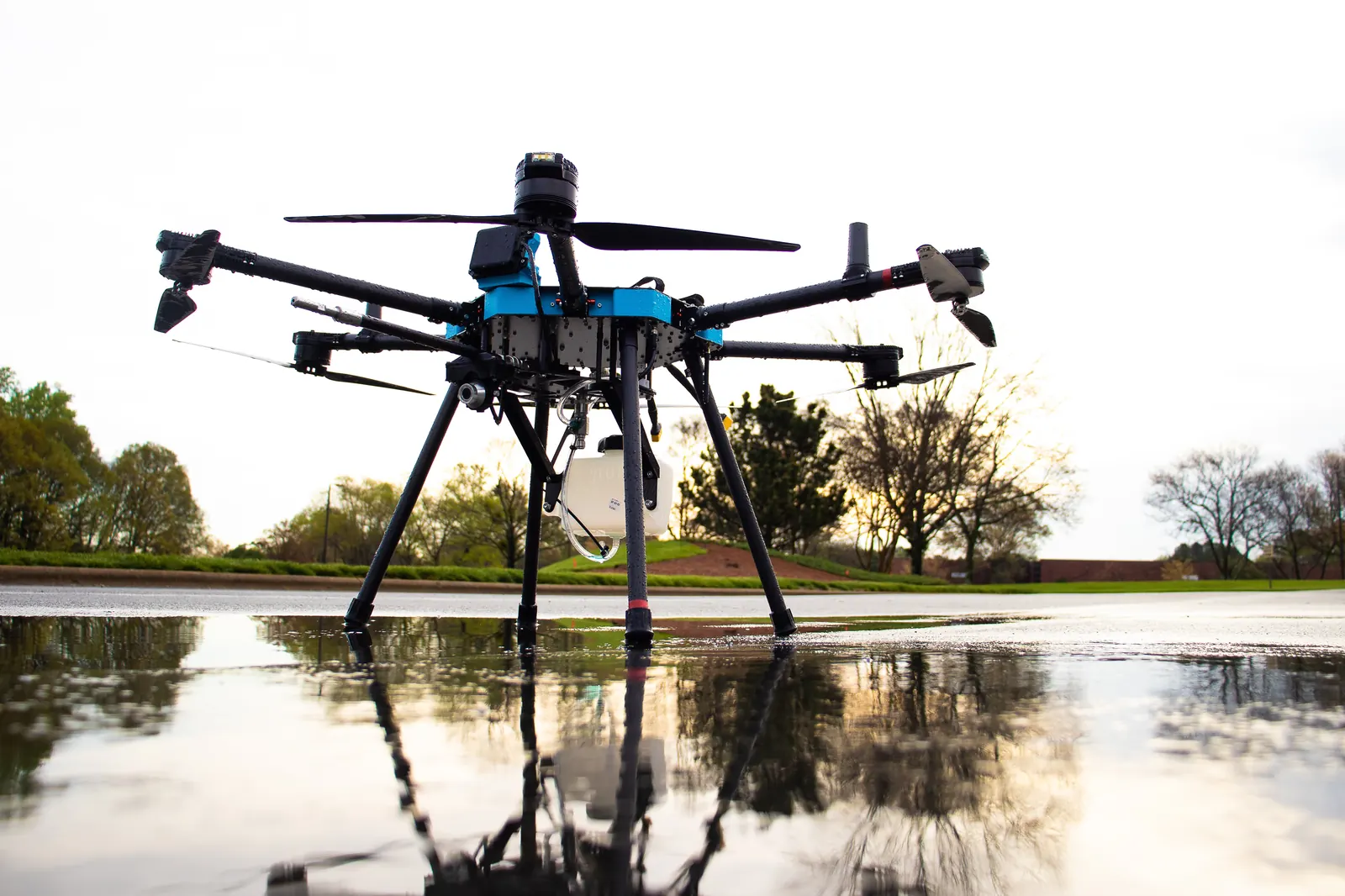
Drone facade cleaning uses a spray drone to wash the outside walls of a building while the pilot stays on the ground. It relies on soft washing: a cleaning solution loosens dirt and organic growth, then a low-pressure rinse carries it away. It works on cladding, brick, stucco and metal panels after the surface has been checked.
What drone facade cleaning covers
Windows are only part of a building's skin. The walls around them collect their own dirt: green algae on the shaded side, dark streaks under ledges and vents, a gray film from traffic, and cobwebs and nests in corners.
Drone facade cleaning deals with those surfaces. The drone flies along the wall and sprays it, fed from equipment on the ground. Drone Sky Cleaners washes facades this way with deionized water and a safe cleaning solution, without scaffolding, swing stages, rope access or lifts.
What soft washing means
Pressure washing cleans by force. A narrow jet of water blasts dirt off the surface. That works on a concrete driveway. On a wall it can strip paint, cut into mortar, dent thin panels and drive water behind the cladding.
Soft washing cleans by chemistry and time instead. A cleaning solution is sprayed on at low pressure and left to sit for a short while. It breaks down algae, mildew and grime and loosens their grip on the surface. A gentle rinse then carries everything away. The pressure is closer to a garden hose than a jet.
This suits drones well. A drone applies liquid evenly over a large area and has no need to push hard against the wall.
How each material responds
Different walls need different handling. A responsible operator adjusts the solution, the dwell time and the rinse for each one.
- Cladding and composite panels: usually smooth and quick to clean. The joints between panels need care so water is not pushed behind them.
- Metal panels: painted metal can develop a chalky layer as the finish ages. Washing may show uneven color underneath, so a test patch comes first.
- Brick: the brick face is tough, but mortar joints can be soft or crumbling on older walls. White salt deposits on brick come from moisture inside the wall and may return after cleaning.
- Stucco: it is porous and can crack. It should only be washed at low pressure, and cracks should be noted before any water is applied.
- Painted surfaces: sound paint cleans up well. Peeling or flaking paint will come off further when it gets wet.
What to check before washing a facade
Most facade cleaning problems come from water getting where it should not go. A pre-inspection looks for those weak points before the drone flies. Walk the building with the operator if you can, and go through this list:
- Cracks in stucco, brick or panels
- Failed or missing sealant around windows, doors and panel joints
- Loose, bent or missing panels and trim
- Open windows, vents, air intakes and exhaust outlets
- Outdoor lights, cameras, signs and electrical boxes on the wall
- Plants, vehicles, patio furniture and entrances below the work area
- A small test patch in a low-visibility spot to see how the surface reacts
How the job runs on the day
After the pre-inspection, the pilot plans the flight path for each wall. The crew cordons off the ground below so nobody walks under the spray. The drone applies the cleaning solution, usually working in sections, then rinses each section once the solution has done its work.
A final inspection follows, and any areas that need it get another pass. You receive before-and-after photos, which are especially useful for facades because gradual dirt is hard to notice until you see the two side by side.
Limits you should know about
Soft washing removes dirt and growth. It does not fix the wall. Rust stains, deep oil stains, graffiti and faded or oxidized finishes may need specialist treatment. Thick moss or years of buildup can take a second pass. Algae tends to come back on shaded, damp walls, so those sides usually need cleaning again sooner than sunny ones.
Flying has limits as well. Wind and rain delay work, and spraying in wind sends solution off target. Buildings near airports may need airspace authorization. In the United States, commercial drone work is flown under FAA Part 107, and in Canada under Transport Canada drone rules, each with a certified pilot and a registered drone. Rules change, so operators must check the current rules.
To find out what your facade needs, request a quote from Drone Sky Cleaners. Quotes are priced per building after looking at its height, surface area and access.
Common questions
Can a drone clean a facade and windows in the same visit?
Yes. Walls and glass are often washed together, since the equipment and cordon are already set up. The facade is normally cleaned first so that runoff from the walls does not dry on freshly rinsed windows.
How do I know if my facade is too fragile to wash?
Look for crumbling mortar, wide cracks, bulging stucco, flaking paint or loose panels. Any of these should be repaired or assessed before washing. An operator's pre-inspection and a small test patch will show whether the surface can take a gentle clean.
Does drone facade cleaning work on parking garages and industrial buildings?
It can. Concrete and metal walls on garages, warehouses and plants are common candidates for drone washing. Heavy soot or oily deposits may need a stronger approach or more than one pass, so share photos when you ask for a quote.