
Drones can clean windows on calm, dry days when the temperature is above freezing. Strong or gusty wind, rain, fog and ice stop a job, and very hot glass in direct sun makes the work harder. Most operators book a date, watch the forecast, and move the job if conditions are not safe.
The short answer: calm, dry and above freezing
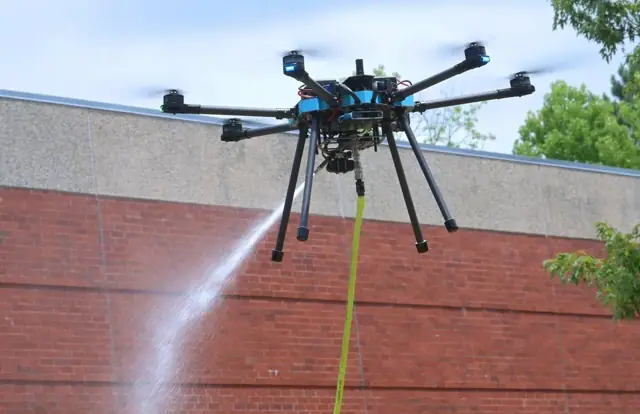
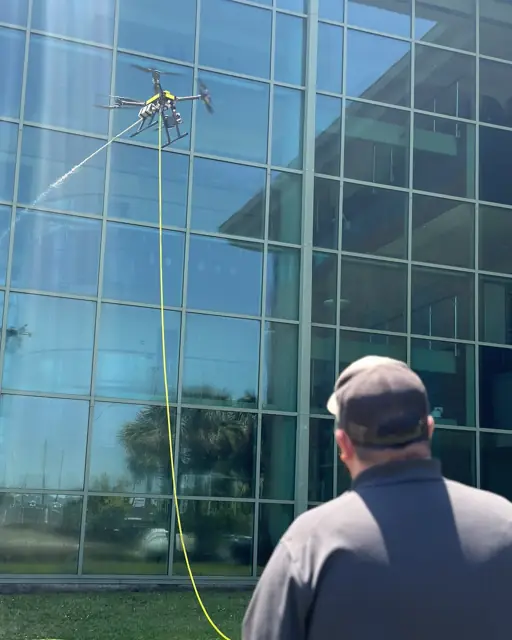
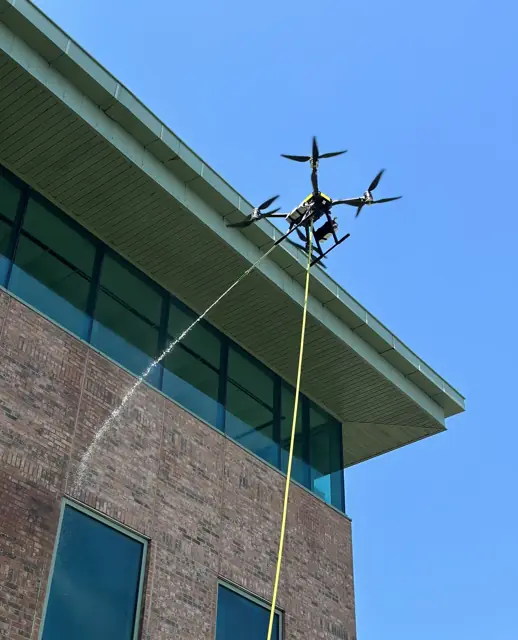
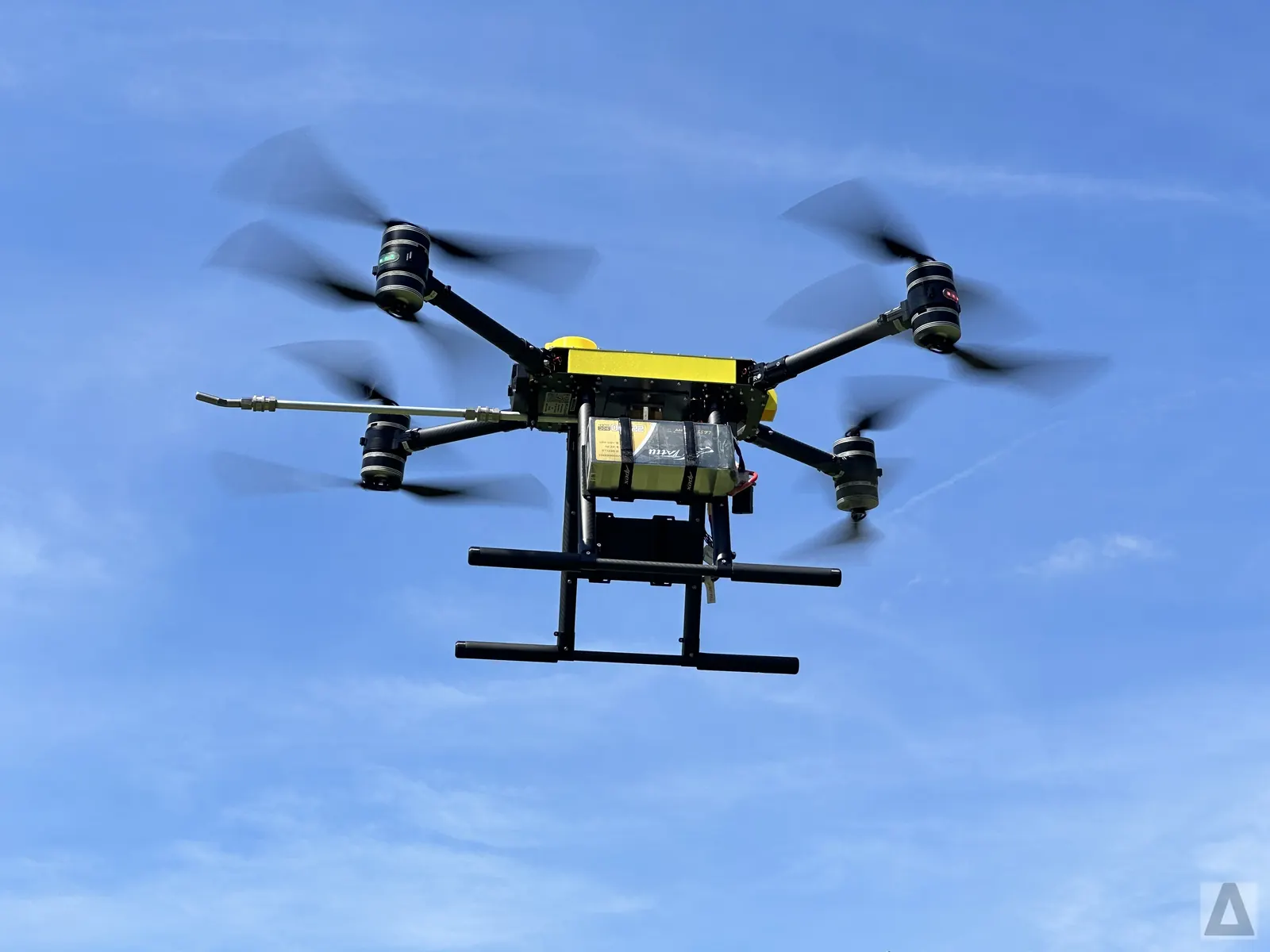
A cleaning drone hovers close to a building and sprays water onto it. Both halves of that sentence depend on the weather. The drone has to hold a steady position, and the water has to land on the glass, stay liquid and rinse away cleanly.
So the good days are simple to describe: light wind, no rain, clear visibility and temperatures above freezing. Everything else is a judgment the pilot makes on the day, standing on site and looking at the actual conditions.
Wind is the main reason a job moves
Wind near a tall building does not behave like wind in an open field. It speeds up around corners, drops down the face of a tower and swirls in the gap between two buildings. A forecast that sounds mild can still feel rough on the windward side of a high-rise.
Gusts matter more than a steady breeze. A gust can push the drone toward or away from the glass, and it carries the spray off target. If the pilot cannot keep a safe, steady distance, the flight waits. Sometimes one side of a building is sheltered and can be washed while the exposed side is left for another day.
Rain, fog and wet days
Rain stops most drone cleaning. The pilot needs to see the drone and the surface clearly, and heavy rain or fog takes that away. Wet weather also makes it hard to judge the result, because you cannot inspect glass properly while it is still being rained on.
A shower the day before is usually not a problem. Neither is a damp morning that clears. The question is what the conditions are during the flight and the final inspection.
Fog deserves its own mention on tall buildings. The street can be clear while the upper floors sit in low cloud. If the pilot cannot see the top of the section being washed, that section waits until the cloud lifts.
Freezing temperatures
Water and freezing air do not mix on a building. Spray can freeze on the glass before it rinses off, and runoff can turn the walkway below into ice. Drone batteries also give shorter flights in the cold.
In colder parts of Canada and the northern United States, exterior washing mostly happens from spring through fall. Winter work depends on mild spells. In warmer regions, cleaning can carry on through the winter months with little change.
Shoulder seasons need a closer look at the hourly forecast. A morning that starts below freezing can be workable by midday, so a later start time is sometimes all it takes.
Heat and direct sun
Hot weather causes a different problem. On glass that has been baking in full sun, cleaning solution can dry before it is rinsed. That can leave marks, which defeats the purpose of the visit.
The fix is timing. Crews start early, wash the shaded elevations first and follow the shade around the building as the sun moves. On the hottest days, a job may be split into a morning session and a return visit.
How jobs get scheduled and rescheduled
A drone cleaning date is a plan, not a promise from the sky. The forecast is checked in the days before, and the final call is made close to the start. If the job moves, it usually moves to the next suitable day. You can make that easier:
- Ask for a backup date when you book
- Tell tenants or residents both dates in the same notice
- Keep access arrangements, like parking and roof keys, valid for both days
- Avoid booking the day before an event you cannot move
- Expect a partial clean on some days, with the windy side finished later
Planning by season
Each season has its own reason to book and its own catch.
When you request a quote from Drone Sky Cleaners, mention which elevations face open water, a highway or a wind corridor, and any dates that are off limits. Quotes are priced per building after a look at its height, glass area and access. Requests are taken across Canada and the United States.
- Spring: clears winter grime and road film, but pollen and showers can interrupt
- Summer: long daylight and dry spells, with early starts to beat the heat
- Fall: a good reset before the cold, though leaves and wind pick up
- Winter: workable in mild climates, weather permitting elsewhere
Common questions
What happens if it rains on my drone cleaning day?
The job is moved to another day. Flying and spraying in rain is unsafe, and the result cannot be inspected properly. Ask for a backup date at booking so tenants and staff already know when the second attempt will be.
Can drones clean windows in winter?
In mild climates, yes. In places with hard winters, cleaning waits for days above freezing, because spray can ice up on glass and on the ground below. Many building managers in cold regions simply plan their washes for the warmer months.
Will rain after a drone wash ruin the clean?
Usually not much. Rain leaves marks mainly when it mixes with dirt already sitting on glass and frames. A freshly washed building has less of that dirt to streak, so it tends to come through a shower in better shape.