
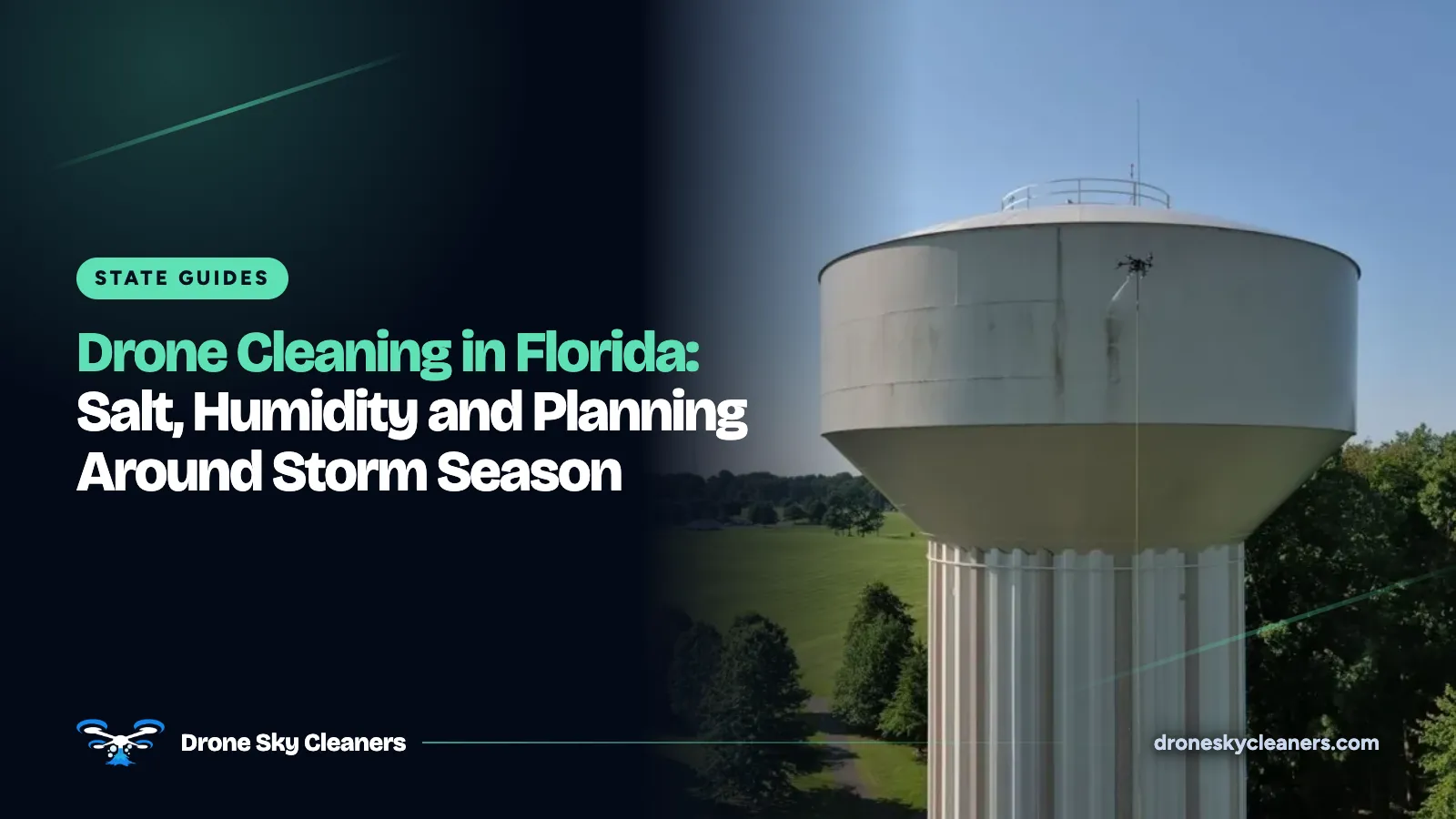
Drone cleaning in Florida is shaped by three things: salt air on both coasts, humidity that grows algae and mildew on shaded walls and roofs, and a storm season that runs through summer and fall. Most owners wash more often than inland states do and plan around afternoon storms and nearby airports.
A state with very little inland
Florida is a peninsula. The Atlantic is on one side, the Gulf on the other, and no building in the state is very far from salt water. Sea breezes push in from both coasts most afternoons.
For a building, that means salt. It lands on glass as a dull haze and on metal as the start of corrosion. Oceanfront condo towers from Miami Beach up through Fort Lauderdale and Palm Beach get the heaviest load. So do Gulf side buildings around Tampa Bay, Sarasota and Naples.
Sun matters as well. Strong sunlight through the whole year bakes salt and sprinkler minerals onto glass, which makes them harder to remove the longer they sit.
Humidity grows things
Warm, damp air is perfect for algae, mold and mildew. In Florida you see it as green film on north walls, dark streaks on tile and shingle roofs, and black spotting on stucco and painted concrete.
It comes back, too. A wash removes the growth, and the climate starts it again. That is why Florida owners tend to plan exterior cleaning as a routine instead of a one time fix.
A drone applies a safe cleaning solution that loosens organic growth, then rinses with deionized water. The low pressure approach is kind to stucco, paint and roof tile. Very heavy staining may need a second pass.
Planning around storm season
Summer in Florida brings a daily pattern: clear mornings, building clouds, then thunderstorms in the afternoon. Drone crews work with it. They start early, finish the exposed elevations first and are packed up before the lightning arrives.
Hurricane season needs a longer view. It makes little sense to book a full wash the week a storm is tracking toward you. After a storm passes, buildings are often coated in salt spray, sand and leaf debris, and many owners want a rinse quickly.
The dry season, from late fall into spring, is the easiest time to schedule. The weather is steadier, and it is also when seasonal residents and visitors are in town and want clear views.
Keep the booking flexible in these months and agree on a backup date at the start.
Condo towers, hotels and resort corridors
Florida has long rows of tall residential and hotel buildings, many with a balcony on every unit. Balconies make rope and swing stage work slow. They also shelter the glass, so rain does not rinse it.
Resort areas add a timing problem. Along International Drive in Orlando or the beachfront strips, a hotel cannot have its pool deck closed for days. A drone wash keeps the pilot on the ground and the cordoned area small, and it can often be staged one elevation at a time.
- Ask for work to start on the side away from the pool or entrance during peak guest hours.
- Tell residents to close sliding doors and move balcony furniture back from the glass.
- Plan the ocean or bay side on a shorter cycle than the sheltered side.
Airports almost everywhere
In the United States, commercial drone work is flown under FAA Part 107. That means a certified remote pilot, a registered drone and authorization in controlled airspace near airports.
Florida has a lot of airports. Miami, Fort Lauderdale, Orlando, Tampa and Jacksonville each have a major one, and there are many smaller fields and military bases between them. Downtown Miami and Fort Lauderdale both sit close to their airports. Parts of the Orlando theme park area also carry standing flight restrictions.
None of this rules a building out by default. It means the operator checks your address early and requests authorization where needed. Rules change, and operators must check the current rules.
Getting a quote in Florida
Drone Sky Cleaners takes requests across Florida. Work is carried out by its own crews or a local Drone Sky franchise partner. Each job includes pre-inspection, flight planning, cordoning off the area below, cleaning, final inspection and before-and-after photos.
Quotes are priced per building after looking at its height, glass area and access. Mention how close you are to the water and when the building was last washed.
It also helps to say which sides have balconies, whether there is a pool deck or valet lane below, and any dates when the building cannot have areas cordoned off, such as holiday weekends.
Related pages
- Drone Cleaning Florida
- Drone Cleaning Miami
- Drone Cleaning Tampa
- Drone Cleaning Orlando
- Drone Cleaning Fort Lauderdale
Common questions
How often do Florida buildings need exterior cleaning?
There is no single interval. Oceanfront buildings usually need washing more often than those a few miles inland, and shaded, humid sides regrow algae fastest. A pre-inspection is the practical way to set a cycle for each elevation.
Can a drone wash be done during hurricane season?
Yes, on suitable days. Summer and fall mornings are often calm and dry. Crews watch the forecast closely, avoid afternoon thunderstorms and move the date if a tropical system is approaching. A backup date is worth having.
Will a drone wash stop mildew from coming back?
No wash can promise that in a humid climate. Cleaning removes the growth that is there and slows its return, but warmth and moisture will bring it back over time. Regular visits keep it from building into heavy staining.