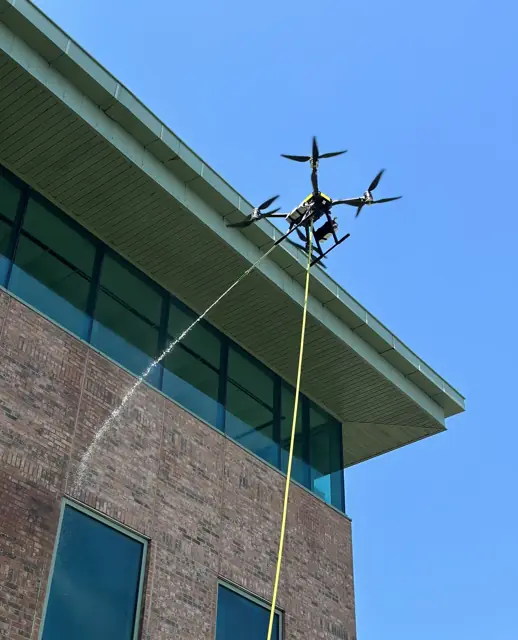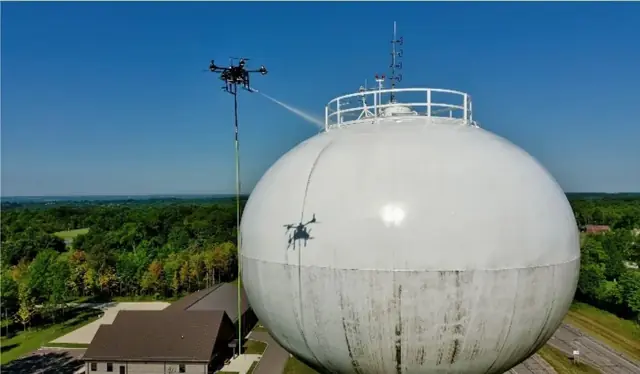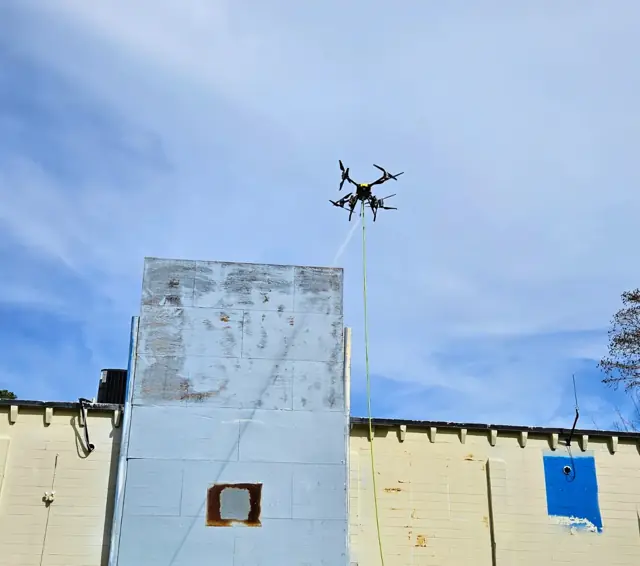

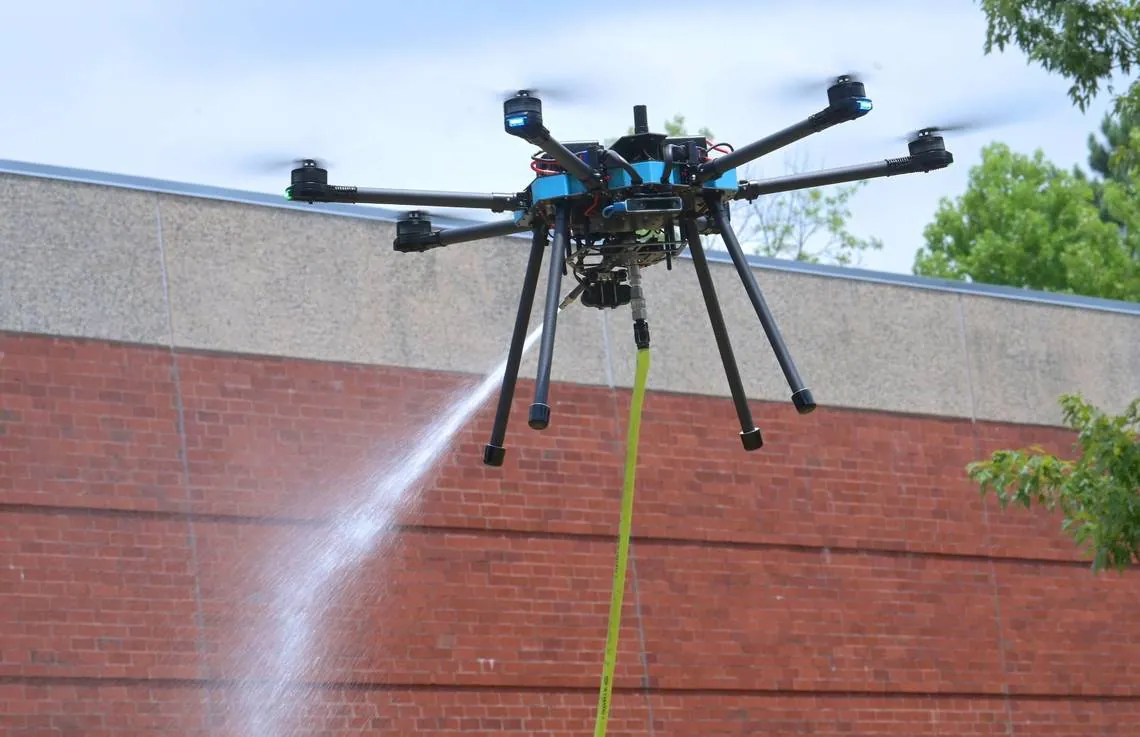
Industrial drone cleaning uses a drone to wash large exterior surfaces such as warehouse cladding, plant roofs, storage tanks and towers. It sprays deionized water and a safe cleaning solution while the pilot stays on the ground. Work is planned around site operations, exclusion zones and the facility's own safety procedures.
Why industrial sites are a different job
An office tower is mostly glass. An industrial site is mostly everything else: long runs of metal cladding, wide low-slope roofs, concrete tilt-up walls, tanks, silos, stacks and pipe racks. The surfaces are big, and many are hard to reach without a lift or a crew on the roof.
The dirt is different too. Dust from yard traffic, exhaust film near loading docks, rust streaks below fasteners and algae on shaded north walls are all common. So is residue from whatever the plant makes or handles.
Traditional access adds its own problems. A boom lift needs a clear, firm path along every wall. Roof work needs fall protection and care around fragile skylight panels. Both tie up space the site would prefer to use for trucks and stock.
What a drone can wash on site
A drone carries the spray to the surface, so height and span matter less than they do for a crew on foot.
- Warehouse walls: long elevations of metal panel or painted concrete, washed in passes.
- Roofs: metal and membrane roofs, including areas around skylights that are unsafe to walk near.
- Tanks and silos: curved shells and domed tops that are awkward to rig.
- Towers and stacks: tall, narrow structures where access by ladder or rope is slow.
- Canopies and signage: dock canopies, high fascia and building signs.
- Windows and office blocks attached to the main building.
Working around operations
Few industrial sites can stop for a cleaning crew. The plan has to fit the way the site runs. That starts with a conversation about shifts, truck schedules and which areas are busiest at which hours.
Cleaning is usually split into zones. One wall or one tank is cordoned off and washed while the rest of the yard carries on. Dock doors on the active side can be done during a quiet window or between shifts. Forklift routes and pedestrian walkways under the work area are closed for a short time and reopened as the cordon moves.
Good planning also covers what is parked or stored outside. Trailers, pallets and finished goods near a wall may need to move or be covered before that elevation is washed.
Site safety coordination
A drone crew is a contractor on your site and should be treated like one. Expect them to go through your induction, follow your permit process and work with a named site contact. Share the hazards early so the flight plan accounts for them.
- Overhead power lines, cranes and conveyor gantries near the flight path.
- Exhaust vents, flares and hot surfaces that create heat or turbulence.
- Areas with flammable vapors or dust where electronic equipment may be restricted. Your safety team decides what is off limits.
- Radio and communication procedures, including who can call a stop.
- Where rinse water will run and which drains it reaches.
Limits on an industrial site
Open yards are windy, and wind is the main thing that delays drone work. Tall structures such as stacks and towers also create gusts of their own. Rain and freezing conditions stop flights.
Some residue is stubborn. Heavy rust staining, baked-on process deposits and years of buildup may need a second pass, and some will need a different treatment altogether. A drone wash is exterior cleaning. It is not tank interior cleaning, paint preparation or an inspection service.
Airspace and regulations
Industrial parks are often built near airports, rail yards and ports. If the site sits in controlled airspace, the operator needs authorization before flying. In the United States, commercial drone work is flown under FAA Part 107, with a certified remote pilot and a registered drone. In Canada, Transport Canada's drone rules apply, with a certified pilot and a registered drone.
Rules change, so operators must check the current requirements before each job.
Scoping and quoting a facility
Drone Sky Cleaners quotes each site after looking at the height of the structures, the surface area and the access. A site plan, photos of each structure and a note of your quiet hours make the pre-inspection faster.
On the day, the sequence is pre-inspection, flight planning, cordoning off the area below, cleaning, final inspection and before-and-after photos. Many facilities then book the next clean on a regular cycle.
Common questions
Does the plant have to shut down during drone cleaning?
Usually not. The work is done zone by zone, so only the ground directly below the drone is closed at any one time. Production, shipping and receiving can generally continue in the rest of the facility.
Can a drone clean inside a warehouse?
Drone cleaning is designed for exterior surfaces. Interior spaces bring racking, sprinklers, lighting and stored goods into the picture, along with water control problems, so indoor cleaning is normally handled with other methods.
Who supervises the drone crew on our site?
The crew manages its own flight operations, but it should report to a contact you appoint, such as a facility or safety manager. That person approves the work zones, confirms timing and has authority to pause the job.