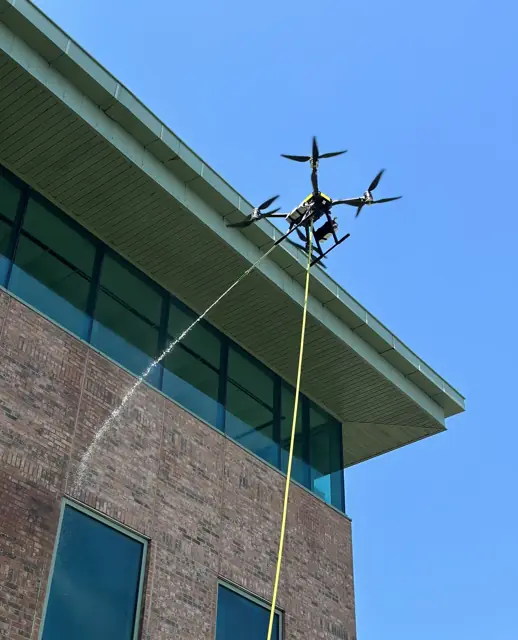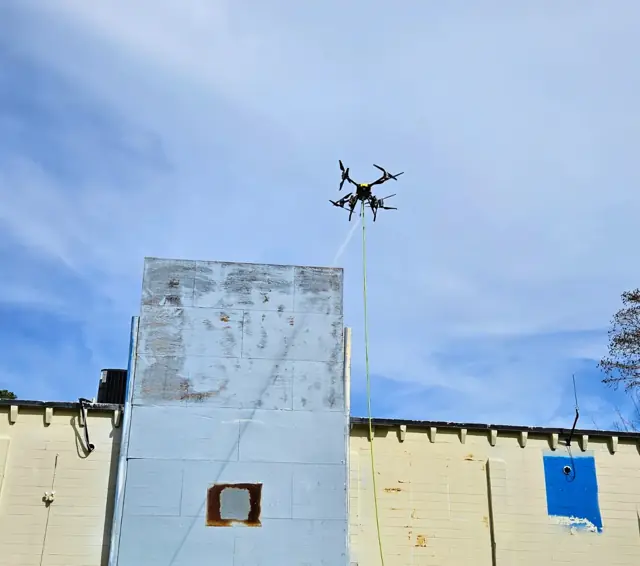

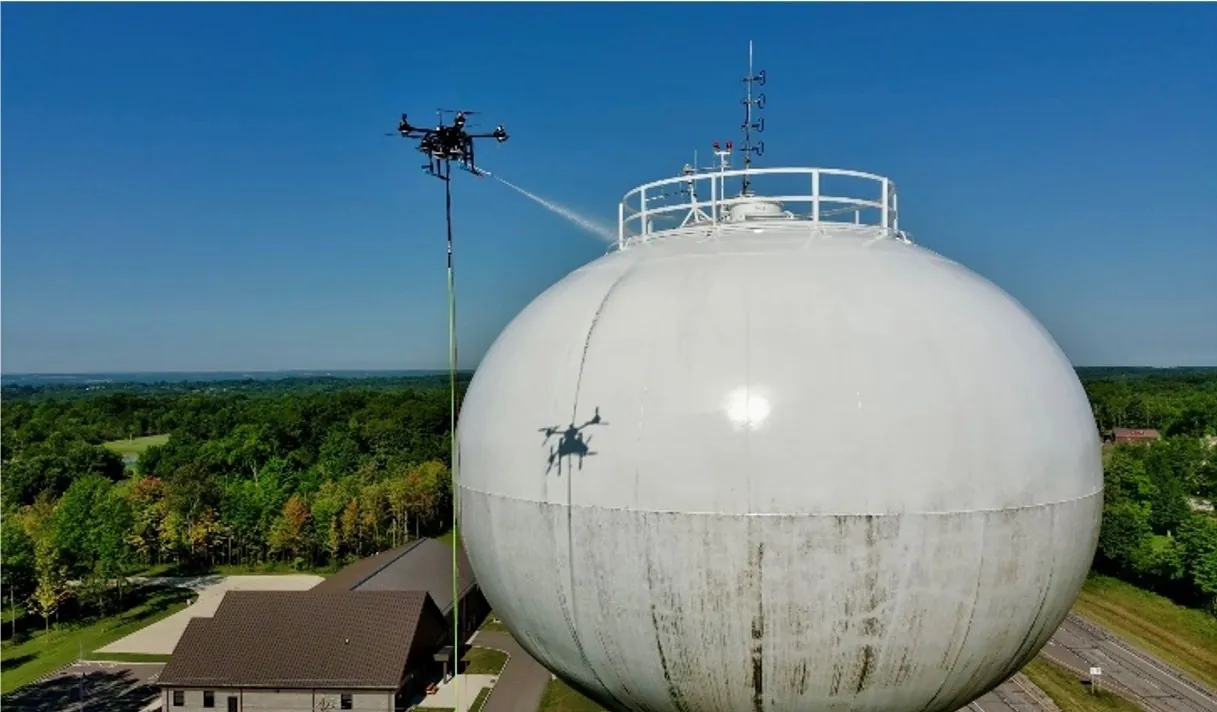
Stadium cleaning by drone covers the high, wide surfaces that are hard to reach by other means: roofs, canopies, exterior signage and glazing. The drone washes with deionized water and a safe cleaning solution while the pilot stays on the ground. Work is scheduled between events and planned with the venue operations team.
The surfaces that make a venue hard to clean
A stadium or arena is mostly roof and skin. The areas that get dirty are large, high and often curved, and many of them hang out over seating or concourses where nothing can stand underneath.
Everyday cleaning crews look after seats, concourses and washrooms. The outside of the building is a different job, and it tends to get put off because access is so awkward.
- Main roofs and the canopies that shelter the stands.
- Fabric and membrane roof panels that show every streak.
- Translucent roof sheets that let daylight onto the field.
- Exterior cladding and the main entrance facade.
- Glazing on suites, lounges, press areas and atriums.
- Large signs, sponsor boards and the outer casing of video screens.
- Attached parking garages and stair towers.
Why dirt builds up fast on a venue
Big roofs collect whatever falls on them. Dust, pollen and pollution film settle across the whole surface, then rain drags them into streaks that run down the edges.
Birds are a constant issue. The steelwork under a canopy makes a sheltered perch, and droppings land on the roof, the signage and the glass below. Event days add their own layer, from vehicle exhaust in the parking areas to smoke and grease from food stalls.
On translucent roofing, dirt does more than look bad. It dulls the daylight that reaches the stands and the playing surface.
What a drone wash covers
A drone carries the wash up to the surface. It sprays deionized water and a safe cleaning solution at low pressure while the pilot stays on the ground. There is no scaffolding, swing stage, rope access or lift, and nobody has to walk on a fragile roof or hang over the edge of a canopy.
That suits wide, open surfaces well. A canopy edge, a long run of suite glazing or a tall sign face can be washed in steady passes. Low pressure is also kinder to membrane roofs, coated panels and sign faces than a hard jet.
Each venue is priced on its own after a look at height, surface area and access.
Working between events
A venue calendar is full of fixed dates, and cleaning has to fit in the gaps. The useful windows are non event days, the off season and the quiet stretch after one event has loaded out and before the next loads in.
The usual aim is to have the building looking right before a big date: the season opener, a televised game, a major concert. Work back from that date and leave spare days, because wind and bad weather delay flights.
Large jobs can be split by zone. One side of the roof this week, the entrance facade and signage the next. That keeps each visit short and lets the crew step aside when the schedule changes, which it often does.
Coordinating with venue operations
A venue is a busy workplace even when the seats are empty. Grounds staff, riggers, caterers, broadcasters and security all have their own plans for the day. The operations team is the link between them and the cleaning crew.
- Agree which zones are free on which days.
- Confirm where the area below will be cordoned off.
- Check for cranes, rigging, cable cams and other work at height.
- Protect the field or event floor from rinse water where needed.
- Ask about lighting, speakers and broadcast equipment near the roof.
- Tell security and the control room when and where the drone is flying.
- Set one point of contact for last minute changes.
Airspace and flight rules
Venues often sit in or near busy airspace, and some are close to airports. In the United States, commercial drone work is flown under FAA Part 107, with a certified remote pilot, a registered drone and authorization in controlled airspace. In Canada, Transport Canada drone rules apply, with a certified pilot, a registered drone and airspace clearance where needed.
Rules change, and extra restrictions can apply around large events, so operators must check the current rules before every job. This is one more reason drone cleaning is planned for days when the venue is empty.
Limits and what to expect
Open bowls and tall roofs create swirling wind, and gusts can pause a flight even on a fair day. Heavy bird mess and old staining can need a second pass. Deep recesses behind steelwork may not be fully reachable from the air.
Drone Sky Cleaners follows the same process on a venue as on any building: pre-inspection, flight planning, cordoning off the area below, cleaning, final inspection and before-and-after photos. The photos are useful to share with venue management and sponsors as a record of the work.
Common questions
Can a drone clean the seats inside the bowl?
Seating is normally cleaned by ground crews, who can work row by row. Drones are used for the high and wide surfaces above and around the seating, such as roofs, canopies, signs and glass, where access is the main difficulty.
Will rinse water damage the field or the event floor?
Runoff is planned during the pre-inspection. The crew and venue staff agree where water will fall and drain, and sensitive areas such as turf, staging or equipment can be covered or scheduled around before washing starts.
How long does it take to wash a stadium roof?
It depends on the size of the roof, the material, how dirty it is and the weather. Larger venues are usually washed in zones over several visits. A pre-inspection gives a realistic plan for your venue and calendar.