
To start a drone cleaning business you need a certified pilot, a registered drone built for washing, a system that produces deionized water, insurance that fits aerial work, written safety procedures and a way to reach building owners. You can assemble these yourself or join a franchise that supplies the method and training.
Start with pilot certification
Nothing else matters until someone in the business can legally fly for a client. Washing a building for pay is commercial drone work, and commercial work is regulated.
In the United States it is flown under FAA Part 107. That means a certified remote pilot, a registered drone, and authorization in controlled airspace near airports. In Canada, Transport Canada drone (RPAS) rules apply: a certified pilot, a registered drone, and airspace clearance where needed. Rules change, so check the current rules with the regulator before you plan a single job.
Choose equipment made for washing
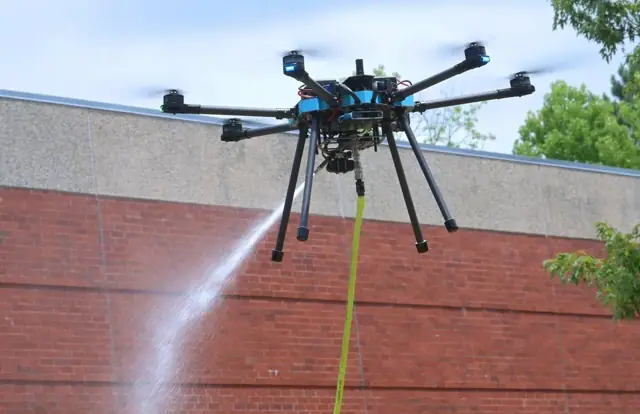
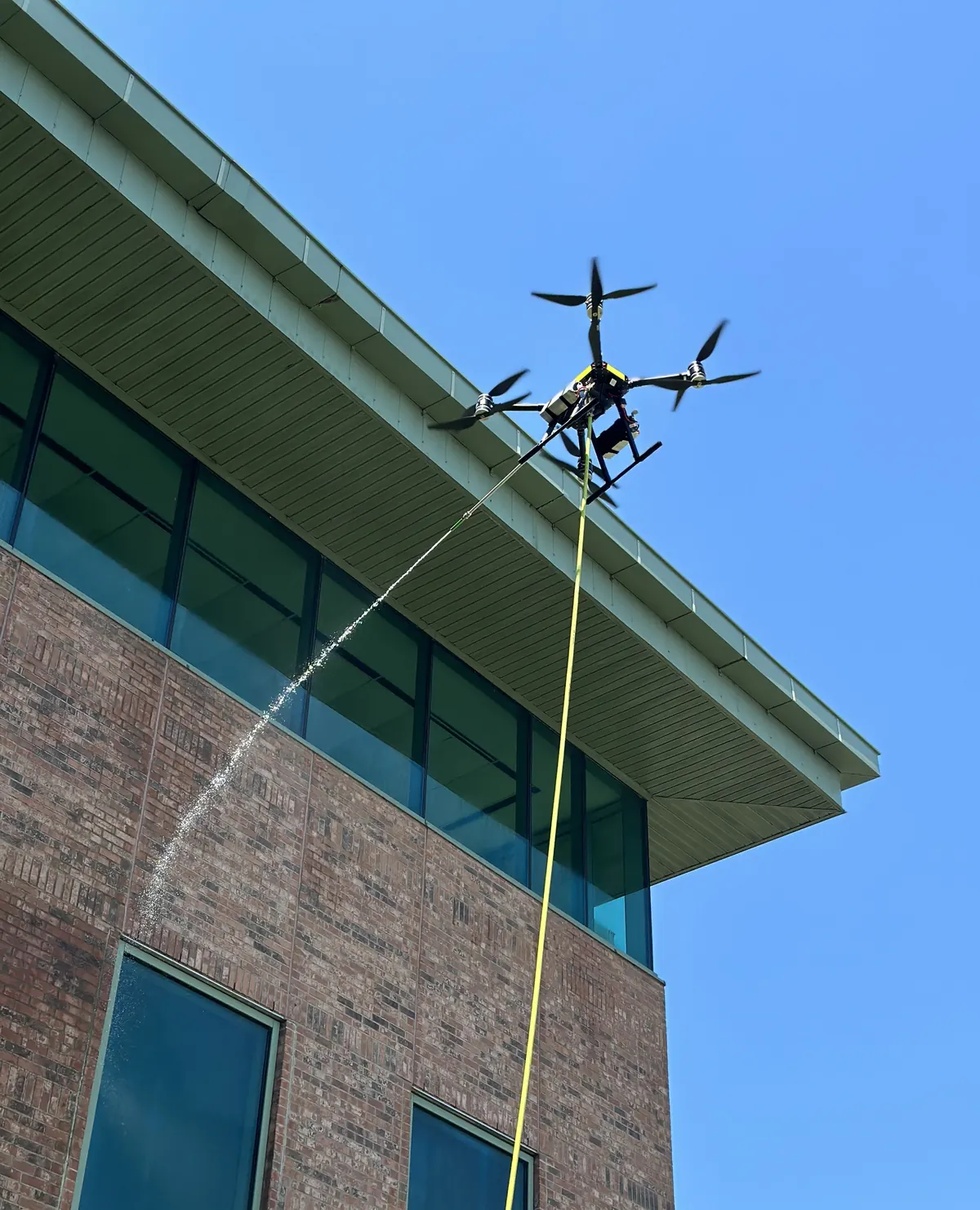
A camera drone and a cleaning drone are different tools. A cleaning drone has to carry a spray system and hold a steady position close to a wall while water is flowing. It also has to cope with the pull of a hose if water is fed from the ground.
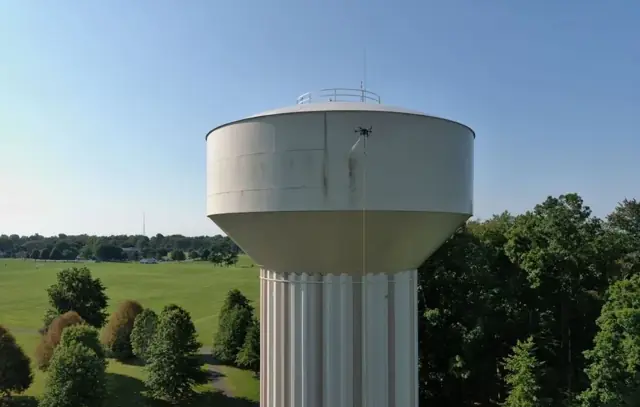
Think beyond the aircraft. You will need spare batteries and a way to charge them on site, nozzles suited to glass and to rougher surfaces, cones and barrier tape, and a vehicle that carries all of it. Buy for the buildings you plan to serve. Gear that suits a two-story house may not suit a tower.
Register the drone as the rules require, and keep a simple log of maintenance and battery condition. A logbook is dull to fill in, but it is the first thing you will reach for when something behaves oddly.
Build the water system
Water quality decides how the glass looks when it dries. Tap water carries minerals, and minerals leave spots. Deionized water has had those minerals removed, so it dries clean without a squeegee. That is why drone window cleaning relies on purified water paired with a safe cleaning solution.
Your system needs a way to purify water, a way to move it to the drone, and a plan for where the water comes from at each site. Ask every client about water access before the job. Finding out on the day that the nearest tap is locked wastes everyone's morning.
Get insurance and write your safety procedures
You are flying equipment near people, cars and glass. Speak with an insurance broker who understands both aviation and contracting work, and be exact about what you do. Commercial clients commonly ask for proof of coverage before they let you on site.
Then put your procedures on paper. A written routine keeps a busy day from turning into a careless one.
- Inspect the building and its surroundings before you plan the flight
- Plan the flight, including where the pilot stands and where the drone takes off
- Cordon off the area below so nobody walks under the work
- Set a wind and weather limit, and stop when you reach it
- Inspect the result and record it with before-and-after photos
Find your first clients
Your first clients are usually close to home. Make a list of buildings you pass every week: a mid-rise office, a car dealership with a wall of glass, a parking garage, a strip of storefronts. Find out who manages each one and ask for a few minutes of their time. Keep a record of who you spoke to and when to follow up.
Show, do not tell. A short demonstration on a small section of a building says more than a brochure. Be honest about limits as well. Heavy staining may need a second pass, and a windy day means rescheduling. Price each building on its own details, such as height, glass area and access, instead of guessing.
Franchise or going alone
You can assemble every piece above yourself. Many independent operators do. It takes time to test equipment, write procedures and learn what clients ask for.
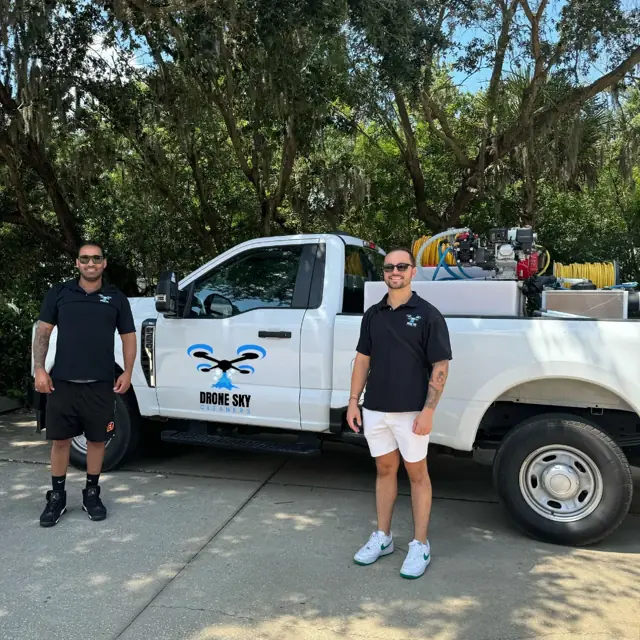
The other route is a franchise, where the brand, cleaning method and training already exist and you follow a set standard. Drone Sky Cleaners works this way with local franchise partners: you submit an application, go through an approval process focused on operational and safety standards, and launch with guidance. Neither route removes the work. Both still depend on certified pilots, careful flying and clients who trust you.
Common questions
Can I start a drone cleaning business part time?
Some people begin with small jobs on weekends. The legal and safety requirements do not shrink with your hours, though. You still need the right pilot certification, a registered drone, suitable insurance and written procedures before your first paid clean.
Do I need window cleaning experience first?
It helps, because you will already understand glass, staining and what clients expect. It is not the same skill as flying close to a facade, however. Plan to practice both the cleaning side and the flying side before taking on client work.
What stops a drone cleaning job from going ahead?
Wind and rain are the usual reasons. Airspace near an airport can also require approval before any flight. A missing water source or an area that cannot be cordoned off safely will delay a job too, so check these during the pre-inspection.