
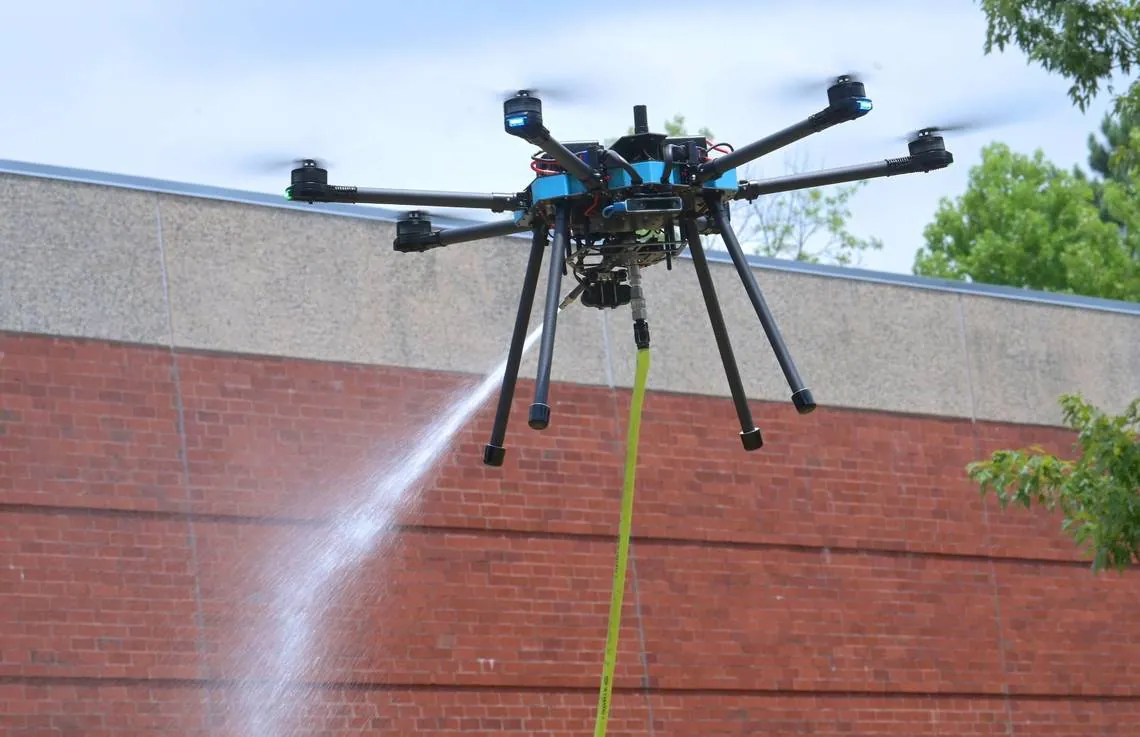
A drone cleaning franchise gives you a brand, a tested cleaning method, training and standards to follow, in exchange for working inside someone else's system. Going independent gives you full freedom over your name, tools and decisions, but you build and test everything yourself. The right choice depends on how you prefer to work.
What you are really choosing between
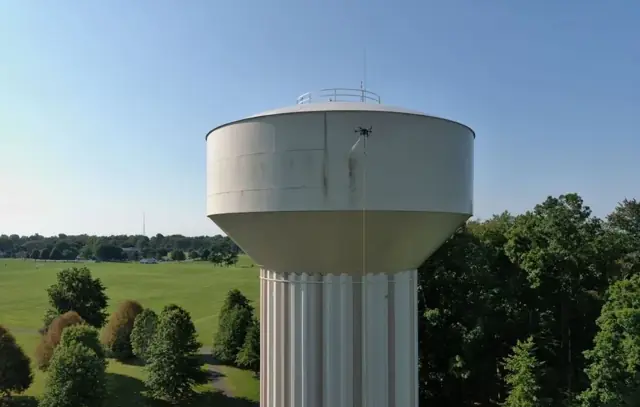
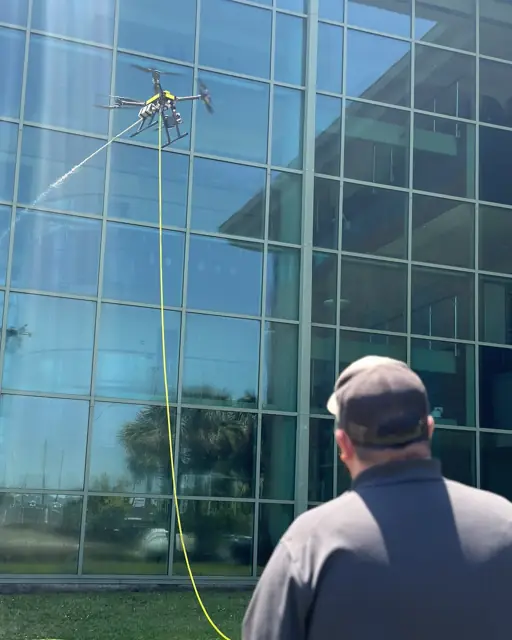
Both paths lead to the same kind of day. A certified pilot stands on the ground, a drone washes a building with purified water, and a client gets a clean facade without scaffolding or lifts. The flying rules are identical for a franchise partner and a solo operator.
The difference is how you get there and who you answer to. One path hands you a system and asks you to follow it. The other lets you design the system, mistakes included. Neither is the right answer for everyone.
Brand and method versus freedom
A franchise comes with a name clients may already recognize and a cleaning method that has been worked out in advance. With Drone Sky Cleaners, that method is a fixed sequence: pre-inspection, flight planning, cordoning off the area below, cleaning, final inspection, before-and-after photos, and booking the next clean. You do not have to invent it.
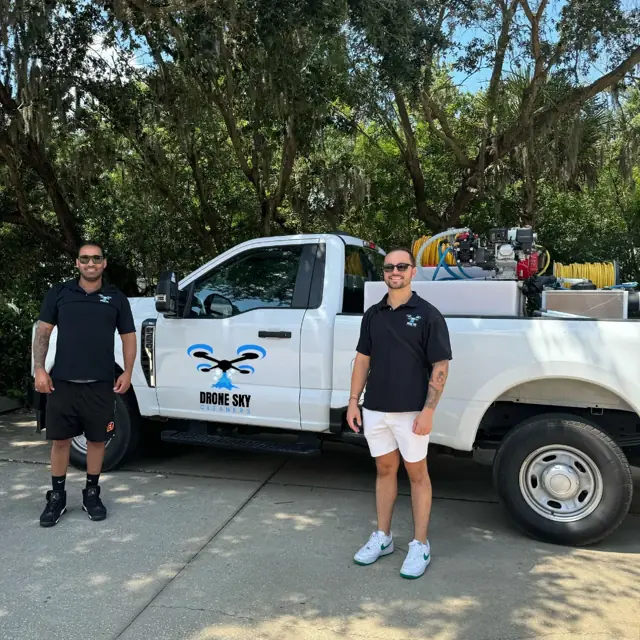
Going alone, the name on the truck is yours. You pick the equipment, the services and the look of the company. If you want to add a service or drop one, nobody has to approve it. The trade-off for that freedom is that every process starts as a blank page, and you find the gaps on real jobs.
Support versus self-reliance
Franchise partners launch with guidance. When a question comes up about a tricky facade or a nervous building manager, there is a team to ask. Training exists before you need it.
An independent operator solves those problems alone or pays for outside help. Some people enjoy that. They like testing nozzles on a quiet afternoon and writing their own checklists. Others find it slow and stressful, especially in the first season when everything is new at once. Neither reaction is wrong. It simply tells you which path is more likely to feel like yours.
Standards and accountability
A franchise holds you to its standards. Drone Sky's approval process focuses on operational and safety standards, and those expectations continue after launch. For some owners that is a relief. For others it feels like a limit.
On your own, you set the standard and nobody checks it but you, your insurer and the regulator. In the United States, commercial flights fall under FAA Part 107: a certified remote pilot, a registered drone and authorization in controlled airspace near airports. In Canada, Transport Canada drone (RPAS) rules call for a certified pilot, a registered drone and airspace clearance where needed. Rules change, so every operator must check the current rules, franchise or not.
The commitments on each side
A franchise is a contract. It sets out what you receive, what you owe and what you may and may not do. Investment details for a Drone Sky franchise are shared with applicants, and no figures appear here. Read every document and have your own lawyer and accountant review it.
Independence has commitments of its own. You buy and maintain everything yourself, and there is no agreement to lean on when something breaks. This article makes no claim that either route performs better. That depends on the person, the area and the effort.
Questions to ask yourself
Answer these honestly before you talk to anyone selling anything.
- Do I prefer following a proven routine, or designing my own?
- How do I react when someone else sets rules for my business?
- Have I built operating procedures from nothing before?
- Who would I call on a hard day, and does that matter to me?
- Do I care more about my own name on the door or about a head start?
- Am I willing to be checked against a safety standard I did not write?
How to decide without rushing
Talk to people on both sides. Ask an independent operator what the first year taught them. Ask a franchise owner what the system helps with and where it chafes. Then compare their answers with your own answers above.
If the franchise route fits, the Drone Sky path has three steps: submit an application, go through approval, and launch with guidance. Applying starts a conversation. It does not oblige you to sign. Give yourself a few weeks. A decision this size should survive a second and a third look.
Common questions
Is a franchise safer than starting an independent drone cleaning business?
Neither is automatically safer, financially or operationally. A franchise supplies standards and training, but the owner still has to follow them. An independent operator can be just as careful with strong procedures. Outcomes depend on the person running the business.
Can I switch from independent to a franchise later?
Some operators do apply to a franchise after working alone. You would still go through the franchisor's approval process, and you may need to change your name, equipment or procedures to match their system. Ask about this directly when you apply.
Do the drone rules differ for franchise owners?
No. The same aviation rules apply to anyone flying commercially, whatever logo is on the uniform. The pilot must be certified, the drone registered and airspace approvals obtained where required. Always confirm the current rules with the regulator.