
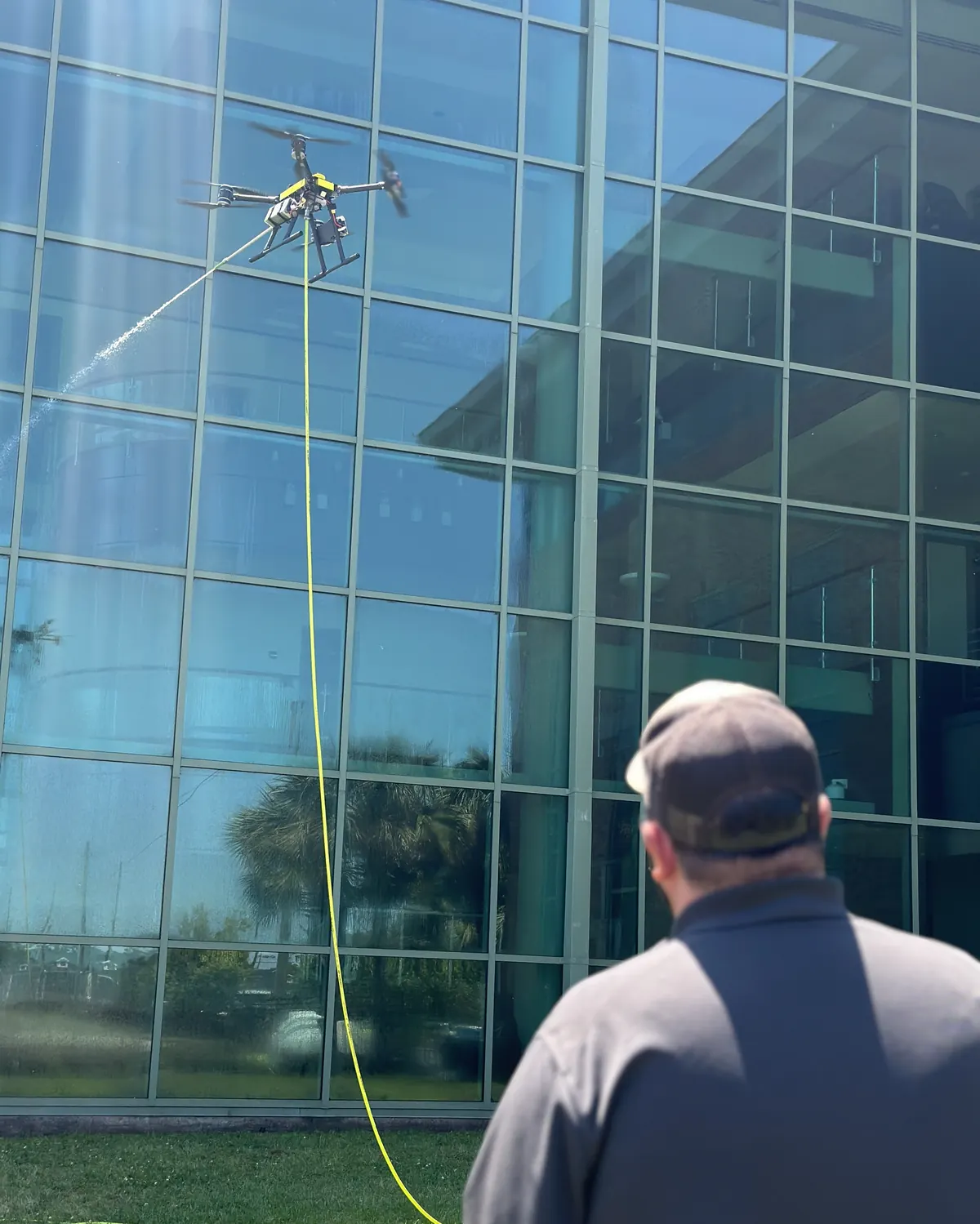
Commercial drone cleaning requires a certified pilot. In the United States the work is flown under FAA Part 107 by a certified remote pilot with a registered drone. In Canada, Transport Canada drone (RPAS) rules require a certified pilot and a registered drone. Rules change, so always check the current rules with the regulator.
Why cleaning counts as commercial flying
Flying a drone for fun and flying one for a client are treated differently. When you wash a building's windows, facade or roof as a service, you are doing commercial work. That brings pilot certification and aircraft registration into the picture.
People often search for a drone pilot license. The regulators talk about certification, but the idea is the same: before you fly for a client, the pilot has to be qualified under the rules of the country where the flight happens.
The United States: FAA Part 107
In the United States, commercial drone work is flown under FAA Part 107. In general terms that means three things: a certified remote pilot is in charge of the flight, the drone is registered, and flights in controlled airspace near airports have authorization first.
That last point matters for cleaning. Many tall buildings sit in cities, and many cities have an airport close by. Whether a building needs authorization is checked during planning, before a date is promised to the client.
Canada: Transport Canada RPAS rules
In Canada, drones are called remotely piloted aircraft systems, or RPAS, and Transport Canada sets the rules. In general terms, commercial work calls for a certified pilot, a registered drone and airspace clearance where needed.
An operator who works in both countries cannot assume one covers the other. Each country has its own rules, and the pilot has to meet the ones that apply where the building stands.
Rules change, so check the source
Everything above is a general overview, not legal advice. Aviation rules are updated from time to time. Before you train, buy equipment or book a job, go to the regulator's own published guidance and read the current rules. In the United States that is the FAA. In Canada it is Transport Canada.
If you plan to hire pilots, ask to see proof of their certification and confirm the drone they will fly is registered. Keep copies on file. Building managers often ask for them.
Practical flying experience
Certification shows a pilot knows the rules. It does not, by itself, make someone ready to wash a glass wall. Cleaning means flying slowly and steadily, close to a structure, for long stretches. That is a different habit from flying high over an open field.
Build experience in stages. Practice in open space first, then near a low wall, then on a small building with nobody around. Things worth practicing before any client job:
- Holding a steady distance from a surface while moving sideways
- Feeling how wind behaves near corners and edges of a building
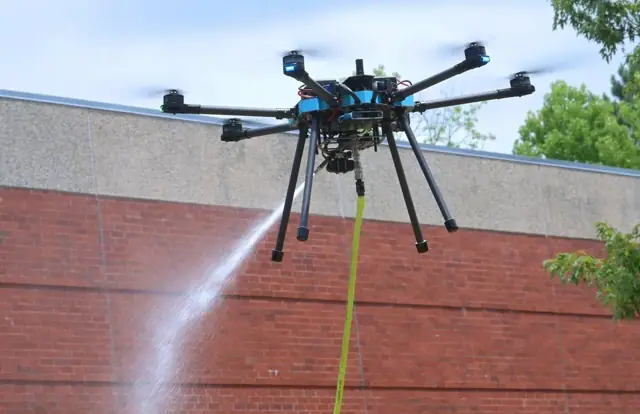
- Flying with the spray running, since moving water changes how the drone handles
- Managing a hose line fed from the ground, if your setup uses one
- Landing calmly when a battery runs low partway through a section
Site training for cleaning work
The other half of the job happens on the ground. A cleaning pilot needs to know the full routine, not just the flight. At Drone Sky Cleaners that routine is pre-inspection, flight planning, cordoning off the area below, cleaning, final inspection, before-and-after photos and booking the next clean.
Site training covers the judgment calls. Where should the pilot stand to see the whole elevation? How wide should the cordon be on a busy sidewalk? When is the wind too strong to continue? What do you say to a curious resident? A pilot also learns the limits of the method, such as heavy staining that needs a second pass.
Putting it together
Think of it as three layers. Certification makes the flight legal. Flying practice makes it controlled. Site training makes it a cleaning job a client can trust. Skipping any layer leaves a gap. A confident pilot without site training can still leave a sidewalk open below the drone. A careful crew without a certified pilot should not be flying for a client at all.
Drone Sky franchise partners go through an approval process focused on operational and safety standards, then launch with guidance. If you are considering that route, getting familiar with your country's pilot certification is a sensible place to begin.
Common questions
Does the business owner need to be a certified pilot?
The person flying for a client must be certified. An owner who never flies can hire certified pilots instead. Many owners still choose to get certified so they understand the rules their crew works under and can supervise properly.
Does a US certification let me fly cleaning jobs in Canada?
Do not assume so. The United States and Canada each have their own drone rules and their own regulator. Before working across the border, check the current requirements with the regulator of the country where the building is located.
Is certification enough to start cleaning buildings?
It is the legal starting point, not the finish. A new pilot still needs practice flying close to structures with water running, plus training in site setup, cordoning and inspections. Insurance and written procedures should be in place as well.