
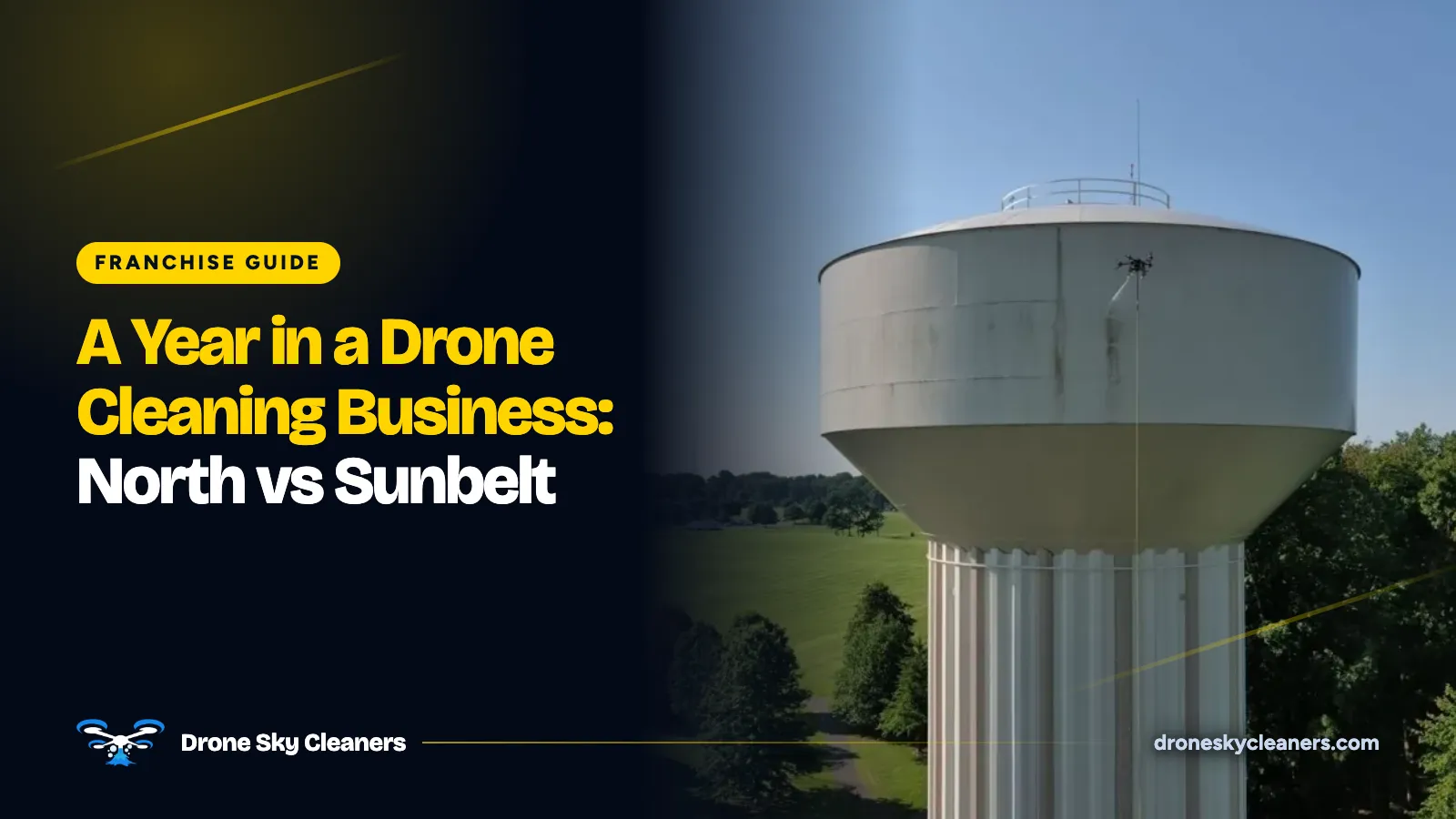
A drone cleaning business follows the weather. In a northern market, work starts with the spring thaw, peaks in summer and early fall, and pauses in deep winter. In a sunbelt market, the cooler months are the busy season and summer is worked early in the day. Owners fill slow periods with roofs, parking garages, post-construction cleans and planning.
Why the calendar matters
Drones wash on calm, dry days above freezing. Hot glass in direct sun is a problem too, because cleaning solution can dry before it is rinsed. Put those limits on a calendar and every city gets its own shape of year.
This article walks through two examples. One is a northern market such as Minneapolis, Toronto or Boston. The other is a sunbelt market such as Phoenix, Houston or Tampa. Neither is better. They are busy at different times, and an owner who knows the pattern can plan around it.
Spring
In the north, spring is the restart. Snow melts and leaves behind months of road salt, sand and grime on low glass, entrances and parking structures. Property managers want buildings cleaned up for the new season, so calls come in quickly once the frost is gone. Weather is unsettled, with wind and rain moving jobs around.
Parking garages are a natural spring job in cold cities. Salt carried in by cars sits on decks and walls all winter and needs washing out.
In the sunbelt, spring is prime time. Days are warm but not harsh. Pollen is the main enemy, coating glass and ledges in yellow dust, and many buildings book a wash once the worst of it has fallen.
Summer
Northern summer is the peak. Long daylight and steady weather allow full days of flying. This is when the large jobs go on the schedule: high-rise windows, full facades, campuses and industrial sites. Post-construction cleans also cluster here, because builders push to finish exteriors in good weather.
Sunbelt summer is the reverse. Heat makes midday washing difficult, so crews start at first light, work shaded faces first and stop by early afternoon. In Florida and along the Gulf, afternoon thunderstorms and tropical weather interrupt plans. In the desert, dust storms can undo a clean overnight. Owners often schedule fewer large jobs and more short ones.
Fall
In the north, fall is the last big push. Managers want glass and facades clean before winter, and roofs get attention once leaves are down and before moss and debris sit under snow. The days shorten and the first freeze sets a hard stop, so the schedule tightens week by week.
In the sunbelt, fall brings relief. Temperatures ease and the working day stretches out again. On storm-prone coasts, late-season weather leaves salt spray and debris on buildings, and cleanups follow. Hotels and resorts prepare their exteriors ahead of the winter visitor season.
Winter
Northern winter is the quiet stretch. Water freezes on glass and on the ground below, batteries lose strength in the cold and exterior washing stops for long periods. A mild, dry day may allow a small job, but nobody plans a season around those.
Sunbelt winter is the opposite: mild, dry and calm. It is often the busiest part of the year. Condo towers, hotels, offices and retail centers all want clean exteriors while the weather is pleasant and visitors are in town.
How owners fill the slow months
Every market has a slower period. Good owners treat it as part of the job, not a gap.
- Roofs: washing moss, algae and staining in the shoulder seasons when window demand dips
- Parking garages: covered levels are less exposed to sun and rain, so they can fit days when open facades do not
- Post-construction cleans: new buildings finish on the builder's timeline, not the season's
- Recurring agreements: talking with managers about a schedule of visits through the year, with dates set ahead
- Site visits and quotes: walking buildings and noting height, glass area and access for the coming season
- Equipment care: servicing drones, batteries and the water system
- Training and paperwork: refreshing procedures and checking that pilot certification and registrations are current
Rules that apply in every season
The calendar changes, the rules do not pause. In the United States, commercial drone work is flown under FAA Part 107: a certified remote pilot, a registered drone and authorization in controlled airspace near airports. In Canada, Transport Canada drone (RPAS) rules call for a certified pilot, a registered drone and airspace clearance where needed. Rules change, so operators must check the current rules.
Drone Sky Cleaners takes requests across Canada and the United States. If you are weighing a franchise, the path has three steps: submit an application, go through an approval process focused on operational and safety standards, and launch with guidance. Bring your city's calendar to that conversation.
Related pages
- Drone Cleaning Franchise
- Drone Cleaning Franchise Minneapolis
- Drone Cleaning Franchise Phoenix
- Drone Cleaning Franchise Toronto
- Exterior Drone Cleaning
Common questions
Do northern drone cleaning businesses close in winter?
Exterior washing mostly pauses while temperatures stay below freezing, but the business does not close. Owners use the time for site visits, quotes, equipment service, training and conversations with property managers, so the spring schedule is ready when the thaw comes.
When should a building manager book a drone clean?
Earlier than you think. Spring and fall fill quickly in cold cities, and the cooler months fill quickly in hot ones. Booking ahead gives the operator room to move the date if wind, rain or airspace approval causes a delay.
Is summer a bad time for drone cleaning in hot cities?
It is workable with adjustments. Crews fly early, clean shaded sides first and stop before the glass gets too hot. Afternoon storms can end a day early. Many sunbelt owners save their largest projects for the cooler part of the year.